


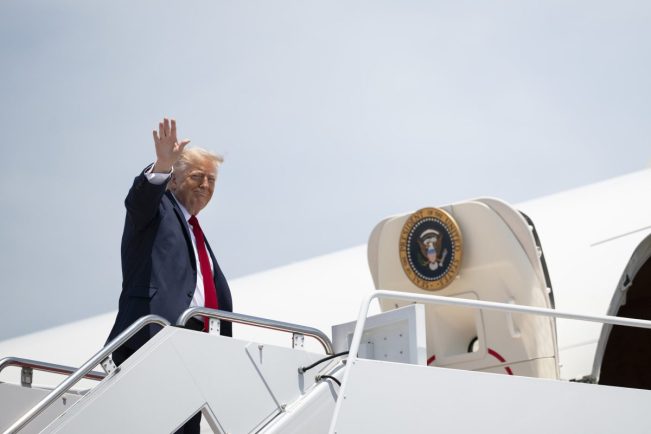
Prime Minister Keir Starmer has congratulated US President Donald Trump after Washington and Tehran agreed a peace framework aimed at ending months of conflict in the Middle East.
Sir Keir described the agreement as “a hugely important step forward” for regional stability and the global economy, as world leaders welcomed the diplomatic breakthrough announced by President Trump on Sunday evening. The deal has already prompted a sharp fall in oil prices and raised hopes of greater stability across the region.
The agreement, which is expected to be formally signed in Geneva on Friday, follows more than 100 days of conflict and intensive negotiations involving the United States, Iran and a number of international mediators.
Announcing the breakthrough on Truth Social, President Trump declared:
“Ships of the World, start your engines. Let the oil flow!”
The President said he expected the strategically important Strait of Hormuz to reopen within days following mine clearance operations. The waterway carries around a fifth of the world’s oil supply and its disruption during the conflict had fuelled concerns over energy prices, inflation and global trade.
Markets responded positively to the news.
Oil prices fell by around four per cent following the announcement, while major stock markets across Asia recorded significant gains as investors welcomed signs that tensions in the region may finally be easing. Japan’s Nikkei index rose by more than five per cent, while markets in South Korea, Hong Kong and mainland China also moved higher.
The memorandum of understanding agreed between the two sides is expected to halt military operations across the region and create a pathway towards a longer-term settlement. Iran’s Supreme National Security Council confirmed that Tehran had agreed to the final wording of the document. Pakistan and Qatar have both been credited with helping to broker the agreement.
While the deal represents a significant breakthrough, some of the most difficult issues remain unresolved. Negotiations on Iran’s nuclear programme and its stockpile of enriched uranium are expected to continue during a proposed 60-day ceasefire period.
Nevertheless, the international reaction has been overwhelmingly positive.
In a statement welcoming the agreement, Prime Minister Keir Starmer congratulated President Donald Trump and the mediators involved in securing the breakthrough. He said:
“This is a hugely important step forward in ending the war, ensuring regional stability, and re-opening the Strait of Hormuz.
“I congratulate President Trump and the mediators from Pakistan, Qatar and elsewhere who have contributed to this breakthrough. We have long urged de-escalation and this is the progress we had hoped to see.”
He added that the UK stood ready to support efforts to ensure freedom of navigation through the vital shipping route.
Britain, France, Germany and Italy later issued a joint statement welcoming the agreement as a diplomatic breakthrough and calling for its rapid implementation. The four countries said the deal presented an opportunity to restore stability across the Middle East and support the global economy.
The agreement was also welcomed by António Guterres, who described it as a critical step towards peace, while Ursula von der Leyen said the breakthrough should help address concerns surrounding Iran’s nuclear ambitions and regional activities.
US Vice President JD Vance described the agreement as a “big win” and said it had the potential to transform the Middle East over the coming decades by creating greater stability and prosperity throughout the region.
For President Trump, the agreement represents a major diplomatic achievement.
After months of conflict and repeated warnings that tensions could escalate further, the United States has succeeded in bringing Iran back to the negotiating table and securing a framework that has already reassured global markets and lowered oil prices.
Supporters argue the breakthrough demonstrates the value of determined diplomacy backed by strength, while critics caution that the success of the agreement will ultimately depend on the outcome of future negotiations over Iran’s nuclear programme.
For now, however, hopes are growing that one of the world’s most dangerous flashpoints may be moving away from conflict and towards a lasting peace settlement.
For households and businesses in the UK, any sustained reduction in tensions could also help ease pressure on energy markets and contribute to greater economic stability in the months ahead.