


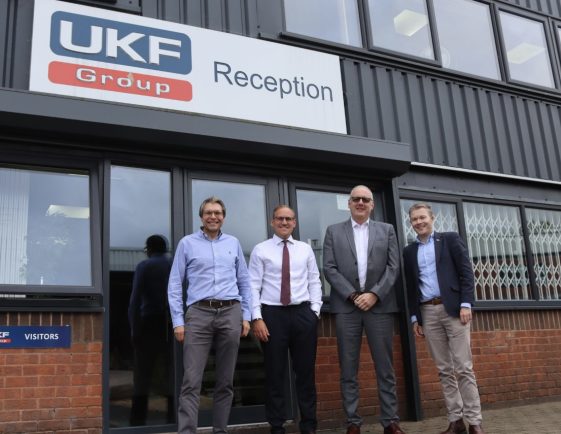
A BROMSGROVE firm has warned the Government’s changes to steel tariffs which come into force on Wednesday, July 1, were putting it at risk.
In March, the government announced it would limit tariff-free steel imports. This will reduce overall quota volumes by 60 per cent compared to the steel safeguard measure. Imports above these levels will face a 50 per cent tariff.
The policy applies across 20 finished steel product categories, including plates, strips, tubes, and reinforcing bars.
UKF Steel, on Buntsford Park, imports steel from the EU and supplies components to the motor industry. Among them are Aston Martin, JLR, Nissan, Lotus and others. It also provides stainless steel balustrades and equipment for the medical, food and catering sectors.
The company has been in Bromsgrove for 35 years. Current CEO Christopher Morris has been involved with the firm for 20 years and bought it six years ago.
He said UKF Steel – which employs 50 people – had experienced tough times from Brexit, the Covid pandemic, cyber attacks, a chip shortage, rising overheads and energy costs and National Insurance changes.
But, he said, this latest development could see the company cease trading before the end of the year and, he warned, many other UK firms would face the same pressures.
The government’s rationale for the tariffs is to protect British-made steel, but Mr Morris said it had to rely on imports as the UK had not made enough steel since the 1970s and it had been a dying trade since the 1980s.
He added the changes would mean a costs increase on 80 per cent of UKF’s imported steel and, because the firm was tied into long-term contracts with its clients, it could not pass those extra overheads on.
Consequently, ‘it would be no longer viable to make anything’.
His warning was echoed by Rod Laight who is from Bromsgrove and President of the UK Spring Manufacturing Association.
He fears for the future of the UK spring manufacturing industry which comprises 260 SMEs, employing 7,800 people across the country.
He said the whole strategy of safeguarding the UK steel industry was ‘a total fallacy’ as UK domestic steel producers could not supply the speciality grades firms needed.
“These measures will increase costs, reduce supply, weaken competitiveness, and directly threaten thousands of manufacturing jobs – while doing little or nothing to increase domestic steel production.”
He has lobbied the government, met virtually with ministers, civil servants and 12 companies – including three from Bromsgrove – and said there was no understanding and no answers.
During PMQs, Bromsgrove MP Bradley Thomas quizzed Deputy Prime Minister David Lammy, asking what action the Government was taking to prevent an ‘avoidable economic disaster’.
In response, Mr Lammy said: “He raises a serious issue, and he might have forgotten this House legislated emergency measures to save steel across our country, and of course we will continue to do more, and I would say to him that of course it is on the agenda for the Prime Minister at the G7.”