

ON 5 January 2026, new UK regulations came into force restricting how food and drink products high in fat, salt and sugar (HFSS) can be advertised. After three years of delays and U-turns since the original January 2023 start date, the rules are now legally enforceable and they’ve reshaped how in-scope brands plan, produce and place their content.
Read on for a plain-English breakdown of which products are caught, which channels are restricted, what “brand-only” advertising actually allows and how marketing teams are tightening their content controls to stay on the right side of the regulator.
Products and Channels Under the Ban
The rules apply to any business with 250 or more employees that manufactures or sells less healthy food and drink in the UK. SMEs are exempt from the new restrictions, though existing CAP Code rules on HFSS targeting still apply to them.
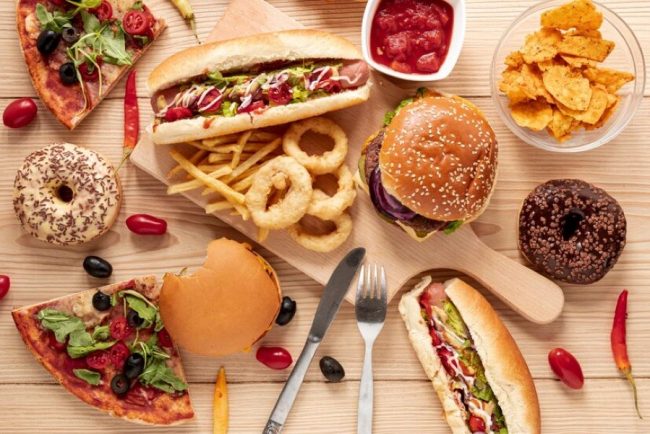
Whether a product is in scope depends on both its category (one of 13 set out in the regulations, covering confectionery, sweet biscuits and bars, savoury snacks, sugary soft drinks, morning goods, breakfast cereals and more), and its score under the Department of Health’s Nutrient Profiling Model.
It’s not a flat product list. A croissant in scope of “morning goods” only counts as restricted if it scores 4 or more under the NPM. Marketing teams now check every product against both the category list and its score before scheduling a campaign.
The ASA has confirmed that “fleeting and incidental” appearances of restricted items can fall outside the rules, as it found in its April 2026 Lidl Northern Ireland ruling, where Almond Croissants shown briefly in a background tray were treated as incidental, while the Pain Suisse featured front and centre was ruled a breach. Anything beyond a brief background cameo risks the same outcome.
The 9pm Broadcast Watershed
The regulations restrict where and when these products can appear. Brands face a 9pm watershed on Ofcom-regulated TV and on-demand services such as ITVX, Channel 4, My5 and Sky’s streaming platforms. No ads for restricted products can run between 5:30am and 9pm, regardless of the programme or who’s actually watching.
The restrictions apply to UK-targeted ads only, but they cover all Ofcom-regulated services and all on-demand programme services under UK jurisdiction.
The Blanket Paid Online Advertising Ban
More significantly, paid online advertising for identifiable restricted products is banned 24 hours a day. That covers paid search, banner ads, sponsored social posts, programmatic display, paid influencer partnerships and sponsored listings on food delivery apps.
If a business pays to boost a post or sponsors a video that shows a restricted item, it’s a breach. There’s one notable carve-out: audio-only ads, such as podcast spots without any visual element, sit outside the scope of the online ban.
How Food Brands Maintain Content Control
Because a single unapproved asset can trigger a breach, food companies have rewritten their internal review procedures. Shared drives where old product imagery sits alongside compliant assets are a real risk, especially when external agencies are pulling files for paid campaigns.
Teams are tightening this by tagging assets against their NPM scores and locking permissions by user role. The best DAM for food and beverage brands handle this kind of governance natively, with expiry dates on imagery and audit trails for every download, so unapproved visuals don’t reach the public. It’s exactly why these types of software are now becoming indispensable for any serious contender in the industry.
The Reality of Brand-Only Advertisements
The rules do allow “brand-only” promotions, which is where a company advertises its corporate brand or a general range without identifying a specific less healthy product. But the ASA has interpreted this narrowly. If an ad uses logos, characters or colour schemes that consumers instantly link to a specific HFSS product, the brand exemption won’t apply.
McDonald’s approach to its Happy Meal advertising offers one example of how the test plays out. The ASA has previously found that a Happy Meal ad could air during children’s programming because the overall meal combination was not classified as HFSS, even though individual items within it were. Brands are now stress-testing every creative execution against the identifiability test before sign-off.
Compliance is further complicated by how the ASA monitors the digital space. Its Active Ad Monitoring system, an AI tool that scanned around 28 million ads in 2024 and was expected to reach 50 million in 2025, now drives the bulk of the regulator’s enforcement work. Around 94% of ads amended or withdrawn last year came from this proactive monitoring rather than public complaints. Final rulings still rest with human reviewers, but the days of slipping through the cracks are over.
Alternative Strategies for Marketing Teams
With paid online advertising tightly restricted, food marketers are shifting budgets to channels that fall outside the new rules entirely. Out-of-home, radio and print aren’t covered by the 2026 restrictions, though the existing CAP Code still bars HFSS ads from media where under-16s make up more than 25% of the audience.
In practice, the ASA has consistently upheld complaints about HFSS ads placed within 100 metres of primary and secondary schools, and most outdoor media owners now apply that distance as a standard exclusion.
Organic social, owned channels and direct email marketing remain fully legal because they don’t involve paid placement. Brands are investing more in recipe content, organic storytelling and community building to keep audiences engaged without relying on paid loops.
Article written by Lydia White