

THANKS to possibly the least subtle introductory video montage ever projected on stage, this Measure For Measure announces its targets from the off as public figures embroiled in sex scandals.
Politicians, presidents, members of the royal family, the super rich – even the disgraced face of TV cooking shows are paraded at full height.
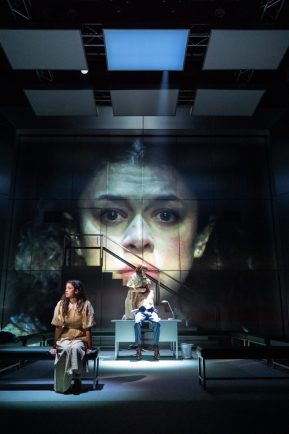
As has become the case in most recent RST productions the set both impresses and to a certain extent dominates. Frankie Bradshaw’s steel, theatre-high prison wall overhung by a vast ceiling of harsh lighting sets the tone and then raises it a level by contracting and adding drop-in glass walls for a tighter, more oppressive cell.
Slick use of trapdoor keeps everything moving seamlessly in a production which somehow feels quicker than its two hours plus.
Beneath this imposing technical and ideological arsenal lurks a production which, while not failing to live up to the stated theme, is witty, clever and funny enough to hold its own.
Adam James’s Duke takes his smiles, cheery patter and gestures from New Labour and exhibits a pleasing lightness and freshness throughout, a complexion which makes the later bursts of anger and impatience even more shocking.
Tom Mothersdale plays a man who confuses, as so many continue to do, the responsibility of power with a carte blanche to do whatever he wishes. A strong seam of insecurity makes the gradual descent into lascivious self-serving all the more chilling.
There’s a sparkling performance from Isis Hainsworth as the hapless victim of much of the play’s despicably immoral trading.
The play’s ambiguous end is beautifully handled. Having witnessed the Duke dispensing what passes for restorative justice – and plainly enjoying every moment of it – we’re only a grateful embrace away from the night’s happy ending. Only it isn’t.
The Duke’s somewhat ‘droit de seigneur’ proposal of marriage leaves Isabella dumbstruck. Having been delivered from subjugation at the hands of a man’s will once she’s immediately faced by another such predicament. Her final action after swapping frying pan for fire is not ‘as wrote’ but makes perfect, if shocking, sense.
With unflagging pace and no opportunity for comedy eschewed, Emily Burns’s production is trenchant, relevant and hugely enjoyable.
Another fixture in the current production tick list is live camera projection. Often these feel more a can of ‘we can’ rather than ‘we need to’ but in this case, with its obvious flavour of putting errant worthies in the spotlight, it works well. We are all used to pictures of the great and the (not so) good squirming under media questioning and somehow the amplified facial expressions and panicked pauses are even better on the big screen.
Projection also helps in some way to save a fairly basic problem in this theatre and in the show particularly. For much of the play’s fairly static content characters are frequently blocked off to areas of the audience by others closer to the front. It’s a situation not helped by the almost unbroken ring of benches preventing movement.
Thank goodness we were able to watch some of it on TV.
Isabella (Isis Hainsworth), Mariana (Emily Benjamin) and Anelo (Tom Mothersdale). Picture by Helen Murray (RSC).