



As the calendar rolls deeper into the year, it’s that familiar time when we shift from complaining about the unpredictable British summer to worrying about the damp British winter. For homeowners across Bromsgrove, Catshill, and Aston Fields, the incoming chill in the air isn’t just a weather forecast — it’s a reminder of the upcoming annual battle with our energy meters.
While the extreme energy market shocks of the early 2020s have stabilized somewhat by 2026, household bills remain stubbornly high. Rather than simply turning down the thermostat and donning three layers of knitwear, taking a proactive approach to winterproofing your property is a much smarter, more sustainable investment.
Here is how you can implement key eco-friendly upgrades to save your wallet, slash your carbon footprint, and keep your home genuinely cozy this winter.
The Fast and Affordable Fixes
Before jumping into heavy renovations, it is wise to address the low-hanging fruit. Warm air has a terrible habit of escaping through the tiniest structural gaps, meaning you are essentially paying to heat the street outside.
-
- Draft-Proofing Doors and Windows: Applying self-adhesive foam strips around window frames and fitting brush strips to the bottom of external doors can yield instant results. Don’t forget the letterbox and keyholes — escutcheon covers cost pennies but block noticeable icy streams.
- Radiator Reflectors: Placing specialized reflective sheets behind radiators attached to external walls prevents valuable heat from being absorbed by the cold brickwork. Instead, it bounces the thermal energy right back into your living room.
Tackling the Big Culprit: Solid Wall Insulation
Many of Bromsgrove’s beautiful historic properties and mid-century terraced houses suffer from a major architectural design flaw: solid brick walls. Unlike modern homes built with cavity walls that can be easily injected with insulation material, solid walls allow heat to pass straight through them like a sieve.
According to data from the Energy Saving Trust, uninsulated solid walls account for a massive 35% of heat loss in a typical older home.
Fixing this issue from the outside can be incredibly expensive, heavily disruptive, and often compromises the character aesthetic of a historic property. The most practical alternative for DIY enthusiasts and local renovators alike is internal wall insulation.
By building a slim timber stud frame against the inside of your external walls, filling it with high-grade rigid insulation board, and sealing it up, you effectively wrap your rooms in a highly efficient thermal blanket.
Getting the Measurements Right (The Secret to Saving Money)
Taking on an internal insulation project can be a highly rewarding weekend challenge or a straightforward task for a local Worcestershire tradesperson. However, the golden rule of home improvement always applies: measure twice, buy once.
When you insulate a room internally, you do lose a tiny fraction of your room’s floor space. To map out your budget accurately and know how much new flooring or paint you will need once the renovation is finished, you should calculate the layout precisely. Using a square footage calculator makes it incredibly simple to assess your room’s total revised area and plan the exact spatial footprint of your new, warmer walls.
Once you have your floor area and wall dimensions figured out, the next step is purchasing the structural shell. Over-ordering plasterboard is a waste of money, while under-ordering means making an annoying mid-project dash to the local builders’ merchant in the freezing rain. You can skip the stressful guesswork entirely by using a drywall calculator.
Balancing the Eco-Upgrades with Local Support
Making structural changes to your home doesn’t just lower your winter heating demand; it increases your property’s long-term value and protects it from the damp and mould issues caused by winter condensation.
If you are struggling with the upfront costs of eco-upgrades, it is always worth checking out regional assistance programs. Keeping an eye on the Bromsgrove Standard Lifestyle section can connect you with trusted local tradespeople and regional home improvement trends that beautifully blend historic preservation with modern green technology.
Winter Upgrade Overview
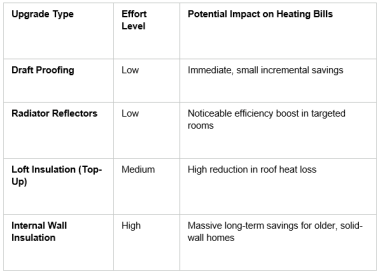
By taking the time to audit your home’s thermal efficiency now, you can stay one step ahead of the winter weather. A few smart calculations today mean a warmer, cheaper, and greener tomorrow.
Article written by Julia Kopczyńska