

BROMSGROVE MP Bradley Thomas was elected at last July’s general election.
Since then, with his party in opposition after having held Government for 14 years, the former Wychavon District
Council leader has been settling into his role as a Conservative backbencher.
Standard editor Tristan Harris journeyed down to Westminster for this special two-part ‘Day in the life of an MP’ feature.
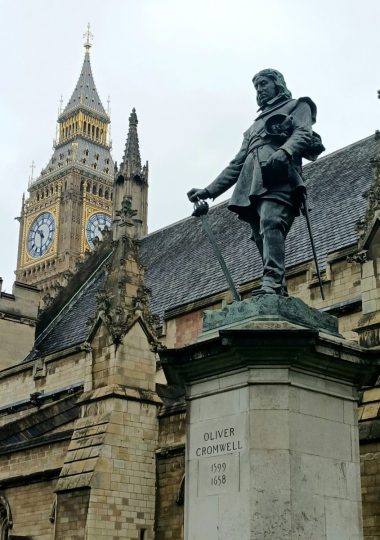
The entrance to Parliament. Picture by Tristan Harris. Copyright Bullivant Media Group Ltd.
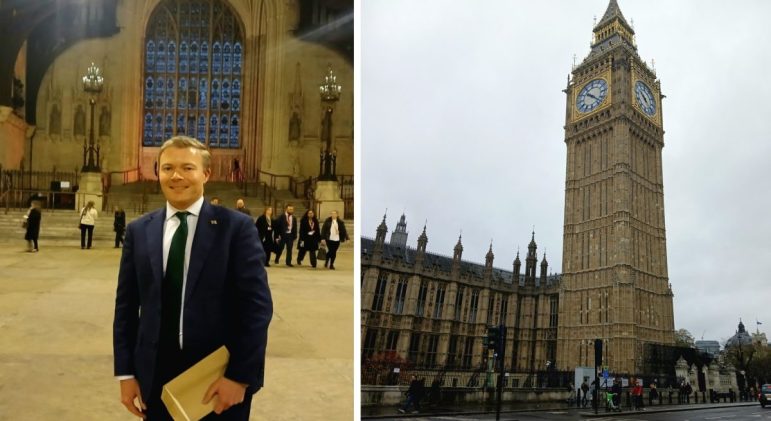
WHEN you walk through the airport style security to gain access to the Palace of Westminster, you are instantly wowed by the hundreds of years of history played out in the buildings.
Westminster Hall – your first port of call – dates back to between 1097 and 1099 and, as well as the ornate stained glass windows and impressively constructed beams holding up the roof, there are plaques adorning the floor marking important events in the room’s history. These range from foreign leaders addressing Parliament, including Nelson Mandela and Barrack Obama, to the lying in state of Queen Elizabeth II, The Queen Mother and George VI among others. This was also where Charles I was convicted of treason and sentenced to death in 1649.
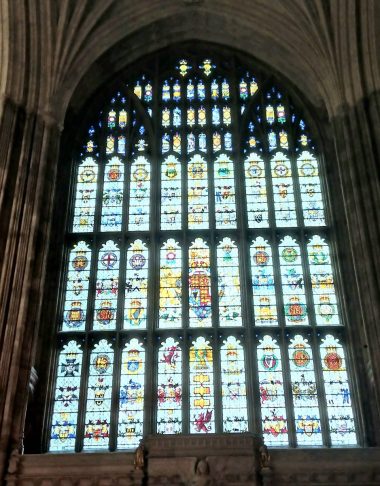
Picture by Tristan Harris. Copyright Bullivant Media Group Ltd.
After journeying through more historical rooms, you enter the Central Lobby – with the House of Commons to the left and Lords to the right.
The Lobby is circled by statues of Prime Ministers, including Margaret Thatcher and Winston Churchill, along with the busts of others.
Strolling into the Commons, is a weird experience for an outsider – having seen it on TV on a daily basis, you suddenly find yourself in there. You cannot help but recall historical political moments and think about the debates undertaken and all the decisions made – of varying success on the nation’s fortunes.
Speaker’s Procession
Before Parliament sits, there is the Speaker’s Procession – The Speaker and his staff are led by the Serjeant at Arms carrying the mace, and the doorkeeper. It was an incredible experience to watch this spectacle before the mace was placed down in the Commons, always facing the party in power.
The Lords is a completely different vibe as you are hit by the pure extravagance – the gold back wall, regal red benches and the gold throne from which The King carries out the official state opening of Parliament.
Mr Thomas said: “It is a unique and, when you first arrive, surreal place of work.”
As well as the historic buildings, you also have heavily armed police officers wandering around with machine guns.
“It’s a fine line – democracy needs to be as publicly accessible as possible but there also needs to be security to protect it.”
The Royal Palace of Westminster is also pretty much self-contained with bars, restaurants, cafes, shops and even its own Post Office.
Each of the 650 MPs all have their own office within half-a-mile of Westminster.
Mr Thomas added: “My office is one of the furthest out so once I’m here, I tend to stay here for the day.
“I can work in the library or in one of the cafes which prevents me having to journey back and forth in between debates I need to attend or vote on.”
Commons votes
When votes are taken, the division bell rings, giving all MPs eight minutes to get to the House of Commons to vote on whatever bill is being debated.
It means it needs to be heard right across Westminster and, more importantly, MPs need sufficient time to get back and go through the ‘aye’ or ‘no’ lobby.
Because of that, the system has bells in all Government buildings as well as some surrounding properties.
But it is not just the ‘Punch and Judy’ political arena where most of an MP’s work takes place.
In Mr Thomas’ words: ‘That is just the tip of the iceberg’.
“Most of an MP’s work goes unseen, behind the scenes – working for my constituents.”
With the main workplace and history aside, I wanted to find what the job entailed on a daily basis.
A typical week
Generally, MPs work in Westminster Monday to Thursday and are based in their constituencies from Friday to Sunday.
The Commons sits at 2.30pm on a Monday to give MPs time to return from all four corners of the Kingdom.
Sessions are then held between 11.30am and 7.30pm on Tuesdays and Wednesdays (the latter including PMQs (Prime Minister’s Questions) and from 9.30am to 5pm on a Friday.
As well as the usual business of debating bills, time is also put aside for any urgent questions. On the Monday I was there, that centred on the Office of Budget Responsiblilty’s statement about last week’s leaking of the Budget prior to its announcement.
The MP and his team meet each morning to discuss the upcoming business in the House of Commons – scheduled debates usually alternate between the 18 different Government departments, including Health, Defence, Home Office, Foreign Office, Transport and others. This means each one gets topics aired in the house every six weeks.
Mr Thomas said he always tried to ask questions of every department and on all the issues because, despite what people may think, national government and the decisions made directly affecting people living in Bromsgrove and other constituencies in their daily lives in some way.
This can vary, depending on constituency – for example, rural communities will be more affected by Environment, Food and Rural Affairs (DEFRA) whereas the Department of Health’s decisions and the Home Office’s will impact on most people’s lives.
Mr Thomas added: “You occupy this position of great privilege but you are also providing a voice on your constituents’ interests.
“We have political party guidelines but I represent everyone’s interests in Bromsgrove.”
As mentioned, the bulk of the MP’s work is for his or her constituencies.
Mr Thomas said: “I came here to Westminster to do an important job but it is important to get to Bromsgrove as much as I can.”
In the constituency
From Friday to the Sunday, MPs will attend local events, hold surgeries to find out about issues affecting people in the area they cover.
Among the recent ones picked up by Mr Thomas are the shortage of school places at Bromsgrove high schools and protecting Bromsgrove’s green belt from over and unwanted development.
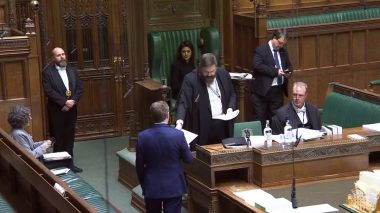
Just last week, the constituency role and Westminster worlds came together when Mr Thomas handed in a petition to Parliament which was signed by more than 5,900 people in Bromsgrove.
The document demanded the Government justify the ‘flawed’ formula used to calculate the increase and to rebalance the housing target so ‘Birmingham took its fair share’.
It also demanded the 85 per cent increase in the district’s housing target was reversed, in addition to the reversal of the reduction in Birmingham’s housing target.
Mr Thomas has also highlighted the good work of local schools, organisations and charities, whilst speaking in the Commons.
Closer to home, constituents email, write in or attend surgeries to highlight issues to Mr Thomas and he and his team will listen or read and see if they can help. The MP’s caseworkers are busy working behind the scenes on these issues and, if they cannot help, they signpost people towards a person or organisation who can.
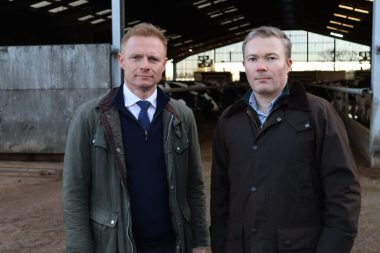
Mr Thomas has also welcomed the Shadow Farming Secretary Robbie Moore MP, to Bromsgrove to speak about the government’s decisions and how they are impacting on rural communities, including the Family Farm Tax. And he has visited the Feeding Trust in Alvechurch.
Schooling debate
My day in Westminster concluded watching an e-petition debate on the Children’s Wellbeing and Schools Bill. Mr Thomas was one of 14 MPs debating the issue, with a particular emphasis on the fors and againsts of home-schooling and the importance of safeguarding measures.
Mr Thomas was able to speak on issues raised by his own constituents – again showing how national government political debate can help influence families in Bromsgrove.
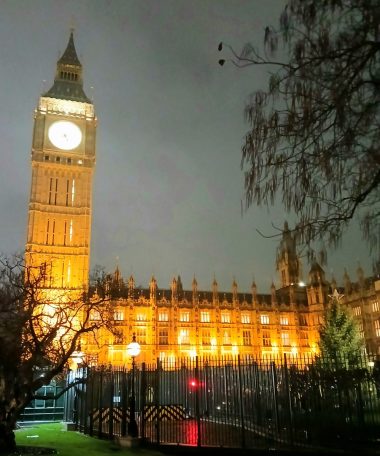
Picture by Tristan Harris. Copyright Bullivant Media Group Ltd.
Touring the district
Mr Thomas was able to speak on issues raised by his own constituents – again showing how national government political debate can impact families in Bromsgrove.
Recently, the Bromsgrove MP has toured the district, including Hagley and Rubery, to make himself more accessible.
“I stood for election so I could represent everyone in Bromsgrove – no matter how they voted or their political allegiance.
“I want them all, if they feel I can help, to know they can get in touch and I’ll do what I can.”
Mr Thomas and his team can be contacted via email: [email protected] or by calling the constituency office on 01527 872135.