

A TEAM at the Royal Orthopaedic Hospital NHS Foundation Trust (The ROH) in Northfield has secured a place on the SPARK THE MIDLANDS programme for an anti-cancer project it has developed.
The scheme uses a minimally invasive anti-cancer and bone regenerative injectable paste, using the cancer-killing properties of gallium.
SPARK THE MIDLANDS aims to provide academic support to advance healthcare research discoveries in the region.
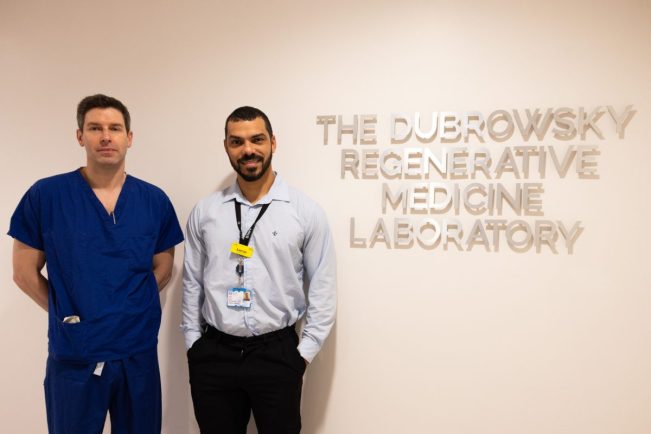
The team from the ROH includes Dr Lucas Souza, Prof Adrian Gardner, and Jonathan Stevenson, alongside Prof Richard Martin and Dr Eirini Theodosiou from Aston University.
Together, they will use the SPARK programme to secure a clear pathway for the cancer-killing paste to be taken from the lab, into clinics and hospitals.
If proved effective through clinical trials, the paste – a gallium-doped bioglass – could be used to treat patients with primary and metastatic bone cancer.
‘Raising the success rate’
Dr Lucas Souza, Research Laboratory Manager at The Royal Orthopaedic Hospital, said: “Where the global success rate for new ideas making it to clinical trials is less than five per cent, SPARK has recorded a project success rate of 62 per cent.
“Thanks to this programme, the ROH will have the support to develop a regional pipeline for the translation of ideas for orthopaedic and bone cancer applications to NHS-approved medical use.”
SPARK THE MIDLANDS is a collaboration between Aston University, the West Midlands Health Tech Innovation Accelerator (WMHTIA) and Forging Ahead.
The programme originated out of Stanford University in California and has proved hugely impactful in improving the success of innovations making their way to clinical trials and then clinical practice.
The programme provides access to specialised knowledge and technical expertise regarding diagnostic, therapeutic and medical device development and sources of funding to support translational efforts. It also helps to provide mentorship and forge networks between researchers, those with technical and specialist knowledge and potential sources of funding.