


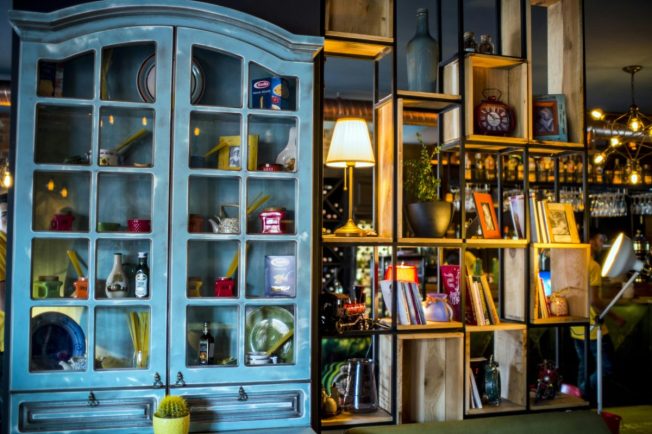
Open shelving divides opinion like few other interior design choices. Done well, it’s one of the most characterful and functional features a room can have. Done poorly, it becomes a magnet for clutter and a source of constant low-level stress. The difference between the two outcomes is almost entirely down to approach — how you select, arrange, and maintain what lives on your shelves. Here are the new rules for getting it right.
Rule 1: Edit Ruthlessly Before You Style
The most common mistake people make with open shelving is treating it like enclosed storage — filling every inch with everything they need to put somewhere. Open shelving is not enclosed storage. Everything on it is on display, which means everything on it needs to earn its place visually as well as practically.
Before you style a single shelf, edit your belongings down to the items that are either genuinely beautiful, meaningfully personal, or so frequently used that they justify their visibility. Everything else should live behind closed doors. This editing process is uncomfortable for most people, but it is the single most important step in achieving shelving that looks considered rather than chaotic.
The rule of thumb is simple: if you wouldn’t be happy for a guest to look directly at it, it shouldn’t be on an open shelf.
Rule 2: Think in Groupings, Not Rows
Lining objects up in a single row along the length of a shelf is the default approach, and it’s also the least interesting one. The new approach to shelf styling is to think in deliberate groupings — small clusters of objects arranged by height, material, and visual weight rather than spread evenly across the space.
A grouping might consist of a tall vase, a mid-height stack of books, and a small object placed in front — a candle, a small sculpture, a trailing plant. The varying heights create rhythm and movement, and the layering adds depth. Leave breathing room between groupings rather than filling every gap, and the overall effect will feel curated rather than crowded.
Odd numbers work better than even ones. Three objects almost always look more dynamic than two or four.
Rule 3: Mix Materials Deliberately
The most visually interesting shelves combine a range of materials — ceramic, wood, glass, metal, natural fibre, living plant — rather than sticking to a single material family. The contrast between textures is what creates visual richness.
That said, mixing materials deliberately means selecting them with intention. Choose a limited palette of two or three materials and repeat them across the shelving unit so that different shelves feel connected rather than random. If you introduce brass on one shelf through a small vase or candleholder, echo it elsewhere. If natural linen features in a basket on one shelf, bring in another natural fibre somewhere else.
The goal is variety within coherence — enough contrast to be interesting, enough consistency to feel intentional.
Rule 4: Use Books as a Design Element
Books are one of the most versatile styling tools on any shelf, but most people either ignore their visual potential entirely or go too far with colour-coordinated arrangements that prioritise appearance over usability.
The balanced approach is to use books in stacks — horizontal piles of three to five volumes — as platforms for other objects, creating levels and varying heights across the shelf. This is more flexible than spine-out arrangements and far more practical. A stack of books with a small plant or ceramic object balanced on top is one of the most reliable and enduring shelf styling combinations there is.
If you do want to arrange some books spine-out, grouping them by tone rather than strict colour creates a softer, more natural effect that still feels considered.
Rule 5: Don’t Neglect the Shelf Itself
The surface and material of the shelf is part of the composition. A beautiful shelf draws the eye even before the objects on it do, and the right shelf material sets the tone for everything displayed above it.
This is where the wooden radiator shelf deserves a special mention. Originally designed to sit above a radiator and make use of otherwise dead wall space, the wooden radiator shelf has become a styling staple in its own right — used in hallways, living rooms, and bedrooms as a narrow display ledge that holds a rotating cast of candles, small plants, ceramics, and seasonal objects. Its slim profile and natural wood finish make it one of the most versatile shelf formats available, and it works beautifully in both modern and traditional interiors.
Whether you’re choosing a floating shelf, a bracketed shelf, or a narrow ledge style, the material matters. Solid oak, walnut, and pine all bring warmth and character. Painted MDF offers a cleaner, more contemporary look. Match the shelf material to the wider material palette of the room for a result that feels integrated rather than added on.
Rule 6: Bring in Living and Organic Elements
Plants and natural objects are non-negotiable on well-styled shelving. They introduce life, colour, and an organic irregularity that no man-made object can replicate. A trailing pothos or string of pearls cascading over a shelf edge softens hard lines and adds movement. A small succulent or cactus takes up almost no space but contributes significantly to the overall feel.
Beyond plants, dried botanicals — pampas grass, dried citrus slices, seed heads, eucalyptus — add texture and a muted, natural palette that works with almost any interior scheme. A small collection of interesting stones, driftwood, or pinecones brings in an earthiness that feels grounded and personal.
The key is to keep living and organic elements refreshed. A dead plant on a shelf undermines the entire composition around it.
Rule 7: Vary the Scale
A shelf full of objects at the same scale reads as flat and monotonous regardless of how beautiful the individual pieces are. The new approach is to vary scale dramatically — one tall, statement piece alongside several smaller objects creates far more visual interest than five medium-sized items sitting side by side.
Think of each shelf as having a hierarchy: one hero piece that anchors the composition, a couple of supporting objects that complement it, and one or two small accent pieces that add detail. This hierarchy gives the eye somewhere to travel and makes the arrangement feel resolved.
Rule 8: Leave Empty Space
Perhaps the most counterintuitive rule of all — and the most important one. Empty space on a shelf is not wasted space. It is a visual breathing room, and it is what allows the objects around it to be properly seen and appreciated.
Overcrowded shelving is exhausting to look at. The eye doesn’t know where to land and the overall effect is one of restless busyness. Deliberately leaving sections of a shelf empty — particularly at the ends of a run or beneath a tall grouping — gives the composition room to breathe and makes the whole arrangement feel more confident and considered.
If you find it difficult to leave space empty, it is almost always a sign that you need to edit your belongings further rather than find more things to fill the gap.
Rule 9: Style for the Season
One of the great advantages of open shelving over enclosed storage is its flexibility. The objects on your shelves don’t need to be permanent fixtures — they can and should change with the seasons, with your mood, and with the moments and occasions that matter to your household.
Rotate in seasonal botanicals, swap out candle colours, introduce a piece of art or a framed photograph for a period of time. This keeps the shelving feeling fresh and alive rather than static, and it means you engage with the objects in your home in a far more active and intentional way.
The best-styled shelves are never truly finished. They evolve, quietly and continuously, as the home and the people in it do.
Article written by Nick Norton