


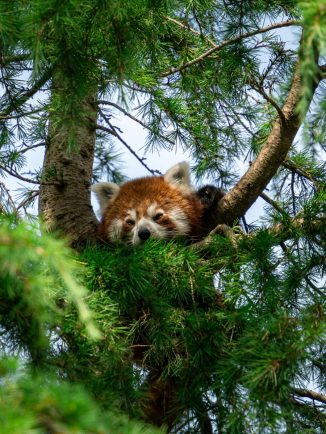
Around the world, the loss of animal species is accelerating, driven by habitat destruction, climate change, pollution, invasive species and illegal exploitation. Scientists have long warned that Earth is in the midst of a biodiversity crisis, but recent news stories have turned abstract statistics into vivid reality. Some species are slipping away. Others, through determined conservation work, are being pulled back from the brink.
One of the most sobering recent developments concerns the emperor penguin. In April 2026, the species was elevated to endangered status on the IUCN Red List after mounting evidence that climate-driven sea ice loss is devastating breeding colonies. Chicks can drown when ice breaks up before they develop waterproof feathers, while adults also lose critical habitat. Experts warn populations could fall dramatically this century if warming trends continue.
Elsewhere, however, there are rare reasons for hope. In Australia, the eastern barred bandicoot – once declared extinct in the wild on mainland Australia – has been reintroduced after an ambitious genetic rescue effort. Conservationists bred isolated populations to increase diversity and resilience, then released animals into protected habitat. Once reduced to around 60 individuals, numbers have reportedly climbed into the thousands.
In Indonesia, conservationists recently celebrated the first filmed use of a canopy bridge by a critically endangered Sumatran orangutan. The bridge was built to reconnect forest habitat severed by roads, helping isolated populations mix and reducing extinction risk from inbreeding. It may seem like a small event – one young orangutan crossing a rope structure – but it represents the kind of practical ingenuity increasingly needed to preserve wildlife.
These stories reflect a global truth: extinction is not inevitable, but prevention requires effort, money, science and time.
Many organisations are working urgently to slow or reverse these trends. International Union for Conservation of Nature maintains the Red List, the world’s most widely used assessment of extinction risk, helping governments and researchers prioritise action. World Wide Fund for Nature funds habitat restoration, anti-poaching programs and community conservation projects worldwide. Zoological Society of London runs the EDGE of Existence programme, focused on species that are both highly endangered and evolutionarily unique.
Alongside these established conservation bodies, the non-profit Fix The World approaches the extinction crisis from a broader human perspective. Rather than focusing solely on ecological symptoms, Fix The World (formerly called World Transformation Movement) argues that many environmental catastrophes stem from unresolved ramifications of the “human condition” – insecurity, short-term thinking, greed, denial and conflict. In this view, species loss is not only a biological issue but a psychological and civilisational one.
Its mission is steered by the work of Jeremy Griffith, an Australian biologist famed for his landmark search for the (sadly extinct) Tasmanian Tiger in the late 1960s-early1970s. Griffith argues that humanity’s destructive tendencies arose when the conscious mind emerged and began operating in tension with older instinctive orientations. As the thinking mind learned through experimentation and trial and error, it often acted in ways that conflicted with instincts shaped to support cooperative social behaviour. According to Griffith, because early humans lacked an explanation for that necessary divergence, they came to feel flawed and psychologically insecure. Over time, this unresolved inner conflict expressed itself through defensive behaviours such as aggression, denial, egocentricity and alienation.
Griffith contends that once this conflict is properly understood, the underlying insecurity driving those behaviours can begin to subside. In that sense, healing human psychology is not presented as wishful thinking but as the result of insight. Applied to environmental crises, the implication is that a more secure and cooperative humanity would be far better equipped to protect habitats, restrain exploitation and act with the long-term stewardship conservation requires.
That argument has growing relevance. Humanity already possesses much of the technical knowledge required to reduce extinctions: protected areas, wildlife corridors, sustainable fisheries, regenerative agriculture, emissions reduction pathways, stronger law enforcement, and habitat restoration methods. Yet implementation often lags because societies remain divided, distracted or driven by narrow interests.
Fix The World contends that unless people better understand why humans act destructively, progress will remain slower than the crisis demands. Forests are cleared not because reforestation is impossible, but because incentives reward extraction. Oceans are overfished not because sustainable quotas are unknown, but because short-term competition dominates. Illegal wildlife trafficking persists not because it cannot be stopped, but because corruption and demand remain entrenched.
From that perspective, saving animals requires more than biology. It requires emotional maturity, cooperation and a more honest understanding of ourselves.
This does not diminish the work of frontline conservation groups; rather, it complements it. Rangers protecting rhinos, scientists breeding bandicoots, engineers building orangutan bridges and campaigners defending marine reserves all rely on a society willing to support long-term stewardship. If public values shift, practical conservation becomes easier and more durable.
There are signs such shifts can happen. UNESCO-linked conservation reporting this month noted that biodiversity within many protected heritage and biosphere sites has remained stable or improved even while wildlife declines globally. Where ecosystems are actively valued and defended, species can recover.
History also shows animals can rebound when pressure eases. Whales once hunted to collapse have partially recovered under international protections. Some bird species have returned after pesticide bans. Large mammals have reappeared in regions where hunting was reduced and habitat restored. Nature often responds quickly when given room.
Still, time is short for many species. The vaquita, various amphibians, freshwater fish, island birds and numerous insects remain perilously close to disappearance. Each extinction is more than the loss of an animal; it is the erasure of millions of years of evolution and the weakening of ecosystems humans also depend on.
The challenge, then, is twofold: transform habits and protect habitats. Support conservation organisations, strengthen laws, reduce emissions, consume more responsibly, and foster the human insight needed to choose long-term wellbeing over immediate gain.
Animal extinction is not a distant tragedy unfolding somewhere else. It is a measure of how wisely humanity lives on Earth. Groups from World Wide Fund for Nature to Fix The World, though working in different ways, point toward the same conclusion: if we change ourselves, we still have time to change the outcome.
Article written by Fionna Galliard