


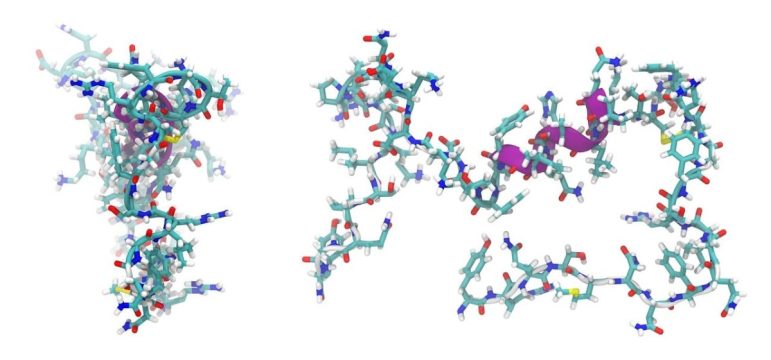
Peptides have emerged as a fascinating area of scientific inquiry due to their potential to modulate various physiological processes within a research model.
CJC-1295 and Ipamorelin have been hypothesized to interact with endocrine and cellular pathways, possibly supporting metabolic regulation, tissue regeneration, and neuroendocrine signaling.
While individually studied for their proposed supports on growth hormone modulation, their combined implications remain an evolving subject of interest. This article explores the speculative research implications of the CJC-1295 and Ipamorelin peptide blend, focusing on its hypothesized interactions with biological systems.
Understanding CJC-1295 and Ipamorelin
● CJC-1295: A Modified GHRH Analog
CJC-1295 is a synthetic peptide theorized to engage with growth hormone-releasing hormone (GHRH) receptors, potentially supporting the secretion of growth hormone within a research model. Unlike endogenous GHRH, CJC-1295 has been modified to prolong its presence in circulation, potentially allowing for extended interaction with pituitary cells. Research suggests that this peptide may bind to albumin, thereby extending its half-life and supporting its role in growth hormone modulation.
● Ipamorelin: A Growth Hormone Secretagogue
Ipamorelin belongs to a class of synthetic peptides hypothesized to interact with the growth hormone secretagogue receptor (GHS-R), a receptor associated with ghrelin signaling. Investigations purport that Ipamorelin may induce growth hormone secretion by mimicking ghrelin’s actions, potentially supporting metabolic regulation and cellular proliferation. Additionally, it has been theorized that ipamorelin may interact with hunger hormone-regulating pathways, presenting potential implications for research on energy expenditure and nutrient utilization.
Synergistic Hypothesis: CJC-1295 and Ipamorelin Blend
It has been proposed that CJC-1295 and Ipamorelin may exhibit complementary properties by engaging distinct pathways associated with growth hormone modulation. While CJC-1295 has been hypothesized to sustain growth hormone-releasing hormone activity, Ipamorelin appears to stimulate growth hormone secretion through ghrelin receptor interactions. This dual engagement suggests that the peptide blend might be explored in research investigating metabolic regulation, tissue regeneration, and neuroendocrine signaling.
Speculative Research Implications
● Investigations into Metabolic Potential
Scientific inquiries suggest that growth hormone modulation may support metabolic processes, including nutrient partitioning and energy expenditure. The CJC-1295 and Ipamorelin blend has been theorized to interact with pathways associated with lipid metabolism, glucose homeostasis, and insulin sensitivity. Researchers speculate that this peptide combination might be explored in models investigating metabolic disorders, including those related to adipose tissue accumulation and glucose regulation.
● Tissue Research and Cellular Science
Growth hormone signaling has been linked to cellular proliferation and protein synthesis, leading researchers to hypothesize that the CJC-1295 and Ipamorelin blend may be investigated in studies focusing on tissue healing and regenerative mechanisms. Investigations suggest that growth hormone modulation may support fibroblast activity, collagen synthesis, and extracellular matrix remodeling, with potential implications for research exploring wound healing and musculoskeletal integrity.
● Neuroendocrine and Cognitive Research
The interaction between growth hormones and neuroendocrine pathways has been a subject of scientific curiosity. It has been hypothesized that the CJC-1295 and Ipamorelin blend might be explored in research investigating cognitive function, neuroprotection, and synaptic plasticity. Some studies suggest that growth hormone modulation may support neurotransmitter activity, potentially supporting memory formation and neurophysiological resilience.
● Immunity Research
Growth hormones have been theorized to interact with immune system pathways, leading researchers to speculate that the CJC-1295 and Ipamorelin blend might be examined in studies focusing on immune response and inflammatory regulation. Scientific inquiries suggest that growth hormone modulation may support cytokine activity, lymphocyte proliferation, and immune surveillance mechanisms, presenting possible implications for research into immune resilience.
● Potential Implications in Cellular Aging Research
Cellular aging is a complex biological process supported by cellular senescence, metabolic shifts, and hormonal fluctuations. Researchers have hypothesized that studies investigating cellular age-related physiological changes, cellular repair mechanisms, and longevity-associated pathways may explore the modulation of growth hormone. The CJC-1295 and Ipamorelin blend might be examined in models assessing the support of growth hormone signaling on oxidative stress, mitochondrial function, and protein synthesis.
● Investigations into Muscle Cell Physiology and Performance
Growth hormones have been theorized to interact with muscle cell protein synthesis, satellite cell activation, and myofibrillar integrity, leading researchers to speculate on their potential implications in studies focusing on muscle cell physiology. The CJC-1295 and Ipamorelin blend might be explored in research investigating muscle cell hypertrophy, recovery mechanisms, and contractile function of muscular tissue.
● Speculative Implications in Cardiovascular Research
Scientific inquiries suggest that growth hormone modulation may support vascular integrity, endothelial function, and cardiac remodeling. Researchers have hypothesized that the CJC-1295 and Ipamorelin blend might be examined in studies assessing vascular elasticity, nitric oxide signaling, and myocardial adaptation.
Conclusion
The CJC-1295 and Ipamorelin peptide blend represents an intriguing subject of scientific inquiry, with researchers hypothesizing its potential interactions with metabolic, regenerative, neuroendocrine, and immune pathways. While investigations continue to explore its speculative implications, the peptide blend seems to provide valuable insights into growth hormone modulation and its broader implications in biological research. Future studies may further elucidate its properties, paving the way for expanded scientific exploration. This peptide blend, as well as the individual peptides, is available for purchase at www.corepeptides.com.
References
[i] Teichman, S. L., Neale, A., Lawrence, B., Gagnon, C., Castaigne, J. P., & Frohman, L. A. (2006). Prolonged stimulation of growth hormone (GH) and insulin-like growth factor I secretion by CJC-1295, a long-acting analog of GH-releasing hormone, in healthy adults. The Journal of Clinical Endocrinology & Metabolism, 91(3), 799–805.
[ii] Ionescu, M., & Frohman, L. A. (2006). Pulsatile secretion of growth hormone (GH) persists during continuous stimulation by CJC-1295, a long-acting GH-releasing hormone analog. The Journal of Clinical Endocrinology & Metabolism, 91(12), 4792–4797.
[iii] Ankersen, M., & Andersen, P. H. (1998). Ipamorelin, the first selective growth hormone secretagogue. European Journal of Endocrinology, 139(5), 552–561.
[iv] Johansen, P. B., & Thuesen, B. (1998). Pharmacokinetic evaluation of ipamorelin and other peptidyl growth hormone secretagogues with emphasis on nasal absorption. Drug Development and Industrial Pharmacy, 24(12), 1109–1116.
[v] Teichman, S. L., Neale, A., Lawrence, B., Gagnon, C., Castaigne, J. P., & Frohman, L. A. (2006). Prolonged stimulation of growth hormone (GH) and insulin-like growth factor I secretion by CJC-1295, a long-acting analog of GH-releasing hormone, in healthy adults. The Journal of Clinical Endocrinology & Metabolism, 91(3), 799–805.