WHEN it comes to Shakespeare and Avoncroft Museum (they go back a long way), I usually think of a warm June or July evening, watching a Midsummer Night’s Dream or one of the Bard’s other comedy masterpieces.
So it was interesting to see another part of the popular venue used for arguably one of the World’s most famous playwright’s darkest creations.
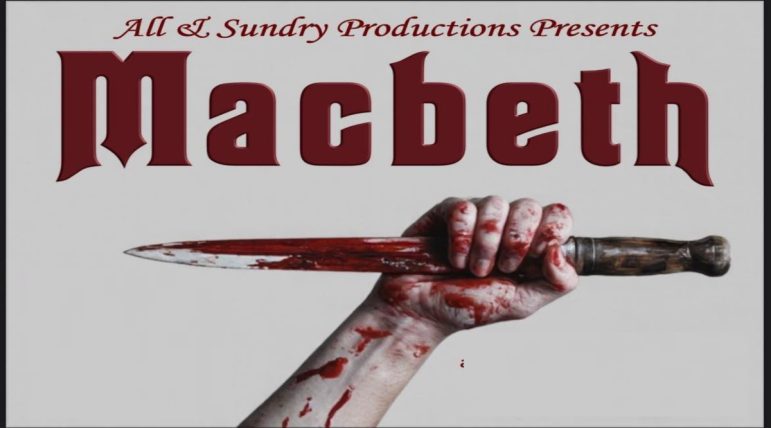
Macbeth was magnificently staged by All and Sundry in the Guesten Hall under a roof which actually dates back 300 years before Shakespeare put quill to paper.
The gothic setting was a masterstroke – with the majority of the action taking place almost on the front row, it provided the most intimate of settings.
The set was simple – a cauldron, a throne and a dining table – but that was perfect for this production. It provided the backdrop for the actors to do their stuff – which is exactly what they did. And the glowing fire below the cauldron and plenty of dry ice made the ambiance as atmospheric as it could possibly be.
To perform this tragedy – at least for the main roles – you need to be able to deliver a good monologue and die an impressive death. And the talented cast did not disappoint.
There were 17 actors in total in this, some playing two or three roles – each and every one can played their part.
Alison Teale was Lady Macduff with Verity Culleton and Milo Donovan as her children. They performed their roles well, especially their emotional triple demise in the second act. Culleton also doubled up as another son who met his untimely end.
Ken Messenger as Duncan (as well as the old man and Siward), Graeme Forbes as Ross, Beth Ralley as Lennox, Stephen Bowles as Malcolm and John Edwards-Bick as the soldier and were all solid and interacted well together on stage as the play unfolded, stepping up to the plate when needed. Along with Ade Fry, the latter three also doubled as murderers, such is the amount of death in this classic.
Fry’s best of his three roles came as the porter, which added a touch of comedy and some much-needed light amidst a lot of shade. As the porter ventured into the audience and conversed with unsuspecting members, he brought that kind of ‘he’s not going to choose me’ unease among those watching usually akin with a stand-up comedy show.
Claire Hardie made for a dynamic doctor, especially her monologue in the second act during the Lady Macbeth sleepwalking scene.
Roy Dean was a brilliant Banquo – rising to the role well in the first act and, equally, appearing as a very eerie ghost in the second.
But there were five absolutely outstanding performances on the evening.
The three witches – Melody Hubbard, Amelia Byng and Amelia Bishop – were wonderful to watch, every time they slithered onto the stage. They were so in sync they sometimes resembled one creature with three heads and even when writhing and not saying anything in the background they boosted the dramatic tension.
In the first act they were mostly mischievous, in the second they were evil personified as they wreaked havoc on those taking centre stage. The scenes with Macbeth, Lady Macbeth and the now renowned ‘Boil boil, toil and trouble’ trialogue were simply stunning and among the highlights on an action-packed night.
Alan Feeney made the most of Macbeth who embarked on a roller-coaster of emotions during the two-hour plus show. He showed every side – the authoritative, confident, scheming, vulnerable, frightened, resigned, determined and more – he captured it all.
And Jessie Thompson was excellent as Lady Macbeth – she was made to play this role and you would struggle to find a better actor for it. As well as her timing and line delivery, her multitude of facial expressions to capture each of her emotions and, sometimes calm, other times erratic, movement took it to another level. There is a school of thought with Shakespeare that it should not even matter what the characters are saying, the audience should be able to get what is going on from the actions alone and she epitomised this theory with her performance.
The Macbeths individually – hitting every one of their many monologues with aplomb – were a joy to watch, together they were sensational.
This was a superb Shakespeare staging – kudos to director John Edwards-Bick, assistant director Lynn Hubbard, their backstage team and everyone who trod those boards.
The audience was wowed and, after two hours and two severed heads later, left the auditorium having witnessed a true tragedy and wondering how many litres of fake blood the production had got through on the run.


21st Jul, 2026