


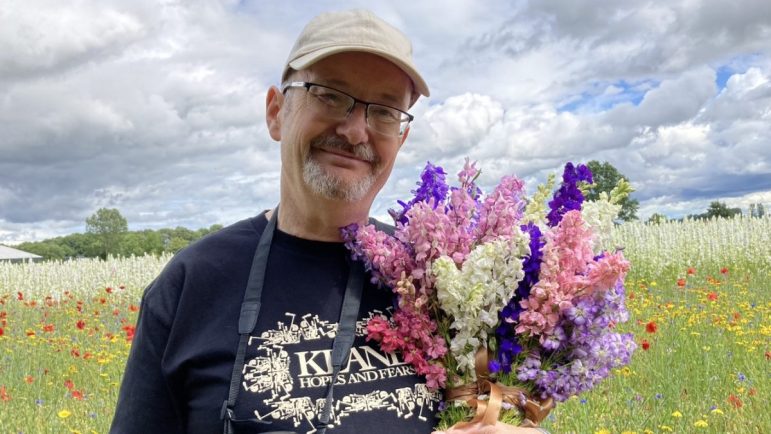

A MAN in Bromsgrove with a rare autoimmune disease has welcomed news of an historic medical milestone which has seen blood donors in Worcestershire chip in to help the NHS become less reliant on plasma imports.
This historic milestone marks the first time in a quarter of a century plasma is being used to make life-saving medicines for NHS patients.
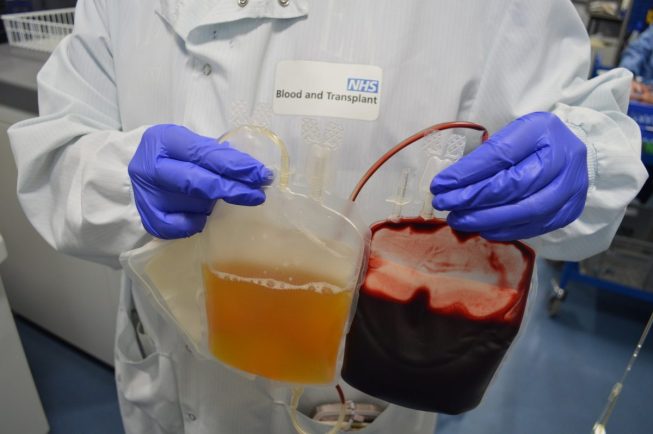
Plasma makes up 55 per cent of our blood and contains antibodies which strengthen or stabilise the immune system.
The antibodies are separated out and made into medicines, reliant on human blood for development, which treat people with life limiting illnesses such as immune deficiencies.
Over the past three years, plasma from blood donors in Worcestershire and across England has been stored up and made into medicines through a weeks long manufacturing process.
Dirk Perry, 44, from Catshill in Bromsgrove, welcomed the news because he received immunoglobulin, an essential medicine, for a rare neurological disorder.
Retired nurse Dirk developed myasthenia gravis, a condition where your body’s immune system attacks itself, in 2018.
“I know firsthand how important these medicine help save lives. It’s a relief to know we’re now making it from local blood donations too,” said Dirk, who lives with partner Rachael.
“I am so grateful to everyone who donates blood. This treatment truly is lifesaving; if not for receiving immunoglobulin I probably wouldn’t be alive today. Please take time to donate.”
Dirk experienced initial symptoms such as falling over, having difficulty holding things, and slurred speech.
He later became breathless any time he exerted himself, could not wash or dress himself, and had dysphagia – not being able to eat and drink properly.
If left untreated, it can cause fatal lung complications – but it can be managed with immunoglobulin. He was diagnosed in 2019 and started treatment with immunoglobulin 2020, which continued until 2023.
He was under the care of The Queen Elizabeth Hospital in Birmingham and The Alexandra Redditch.
Across Worcestershire, hundreds of people receive immunoglobulin each year, with around 17,000 people reliant on it annually across England. Thousands more are reliant on albumin, another plasma medicine used in childbirth, trauma and for liver conditions.
Over the past three years, donors in Worcestershire have supplied around 5,800 litres of plasma to help combat the global shortage locally. That is enough to make around 2,600 bottles of immunoglobulin, which can save or improve around 70 lives a year.
The NHS has previously relied solely on imported plasma medicines however supplies are now bolstered local donors.
There are two ways to give plasma. Every time you give blood in Worcestershire, your plasma may be used. Or you can donate plasma at three specialist sites in Birmingham, London and Reading.
A recovered plasma donation collects around 270 millilitres of plasma, whereas a plasma donation can provide between 560 millilitres and 700 millilitres.
Daniel Cooper, NHSBT assistant director for blood donation operations, said: “Thanks to our amazing blood and plasma donors in Worcestershire.”
Go to blood.co.uk to become a donor.