
Meet the mappers helping to fight female genital mutilation in Tanzania from lockdown in the UK and find out how you can join them.
 Volunteer mappers in the UK have described their “incredible” and “rewarding” experiences in lockdown helping to fight female genital mutilation (FGM) thousands of miles away in east Africa.
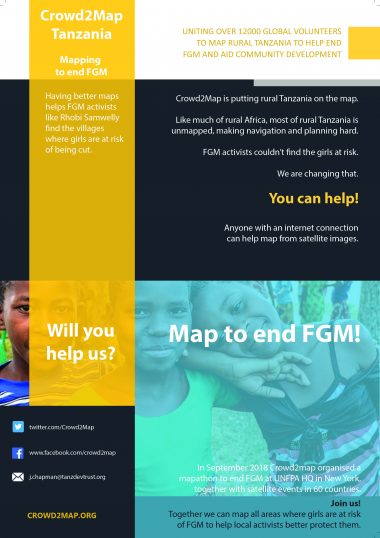
The Crowd2Map project has gained almost 3,000 new mappers since the beginning of March last year, bringing the total number to around 16,000 from across the globe.
Almost a third of the people working from their bedrooms and living rooms helping to plot millions of buildings on previously blank areas of Tanzania on OpenStreetMap are from the UK, said project founder Janet Chapman.
Their work is used to help guide activists on the ground to girls at risk, and is thought to have helped save more than 3,000 girls there from FGM since Crowd2Map was set up in 2015.
FGM, the intentional altering or injuring of the female genitals for non-medical reasons, is against the law on under-18s in Tanzania but still happens in many villages.
Speaking ahead of this year’s International Day of Zero Tolerance for FGM on Saturday, Ms Chapman said it was “amazing” to see an upsurge in volunteers during the first lockdown.
Ms Chapman, who is also chairwoman of the Tanzania Development Trust (TDT), said many told her they were glad to have something meaningful to do during the pandemic.
She said: “It’s been amazing to see so many new mappers during lockdown.
“Many have told me that they are grateful for the opportunity to do something useful in these difficult times.
“Others have said they relish the chance to learn a new skill, and some find mapping soothing, even meditative.”
Catherine O’Farrell, 26, said she “needed more purpose” in lockdown while she was shielding with epilepsy and severe asthma.
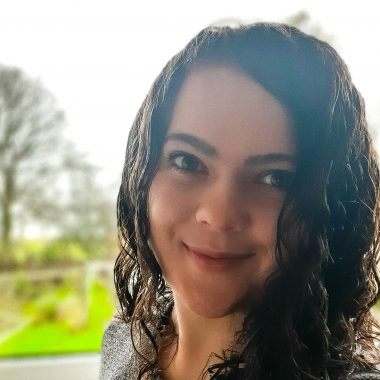 “The first mapping sessions you do truly are incredible – taking a section on the map, finding and mapping all of the roads and buildings in a part of the world that’s so far away” – Catherine O’Farrell.
The psychology graduate said her volunteer efforts made her realise “a pandemic that shuts us away in our houses over here doesn’t end FGM”.
She said: “The first mapping sessions you do truly are incredible – taking a section on the map, finding and mapping all of the roads and buildings in a part of the world that’s so far away.
“Then you start to think about the people living in the buildings you map, the girls you will be helping.”
Samantha Connolly-Boles got back into mapping early in the lockdown last year after having her first child.
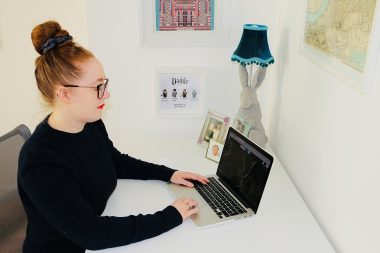 Samantha Connolly-Boles is one of thousands of UK volunteers helping to fight female genital mutilation thousands of miles away in east Africa.
The 34-year-old who previously worked in victim support for the British Transport Police, described it as an accessible and rewarding activity.
She said: “I can dip in and out when I want to.
“When you’re mapping a building, to know that that’s going to help someone find one of the girls that needs help, it’s just super rewarding.”
The sociable side in speaking to fellow volunteers online is an added bonus, she said.
“I’m going onto the forums more and having a chat with the other volunteers more than I would’ve done before (lockdown) I think,” she said.
“With being in the house all the time you do crave that communication and that connection.”
IT consultant Krishna Pavan Challa said the aim of his volunteer work is “to bring things to life” on the maps on the computer.
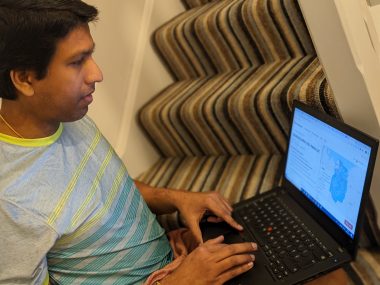 Krishna Pavan Challa is one of thousands of people who have been mapping from their homes during the pandemic here in the UK.
The 39-year-old father-of-two, who lives in Dartford, Kent, said: “We try to plot things on OpenStreetMap and bring them to life and then the real action, the tangible action happens with the field volunteers (in Tanzania).”
He said his seven-year-old daughter, Anika, had even got involved after asking what he was doing and saying she wanted to help.
He added: “I said it’s not a game, it’s something important that I am doing.
“She quickly picked it up on her own.
“She said she wanted to do it.”
How you can get involved:
You can map, validate, donate your old phone, donate via Global Giving, or volunteer to help in other ways!
MAP
Volunteers are mapping buildings, roads and villages via satellite imagery on OpenStreetMap – everyone can help. You need to register on OpenStreetMap.org, open HOT Tasking Manager and map one of these tasks on your computer.
All the instructions can be found in each task, and here is a helpful video to get you started.
If you would like to be partnered with a remote mapper to help with fieldpapers, email: [email protected]
VALIDATE
All maps on OSM need to be validated – just so there are no any mistakes. Any more experienced mapper can do it.
If you have done validation before, head straight to one of these tasks on the HOT Tasking manager, and get started!
If you have never done validating before, contact [email protected] and she will walk you through it.
DONATE YOUR OLD PHONE
Have an unused working phone hidden away in your drawer? The charity can make good use of it.
Please send old or new unused phones, and the charity will use them to train more local people in Tanzania to map their own communities.
DONATE VIA GLOBAL GIVING
Any donation, big or small, goes a long way in Tanzania. The charity are using donations to buy phones, train community change agents and run mapping workshop locally in Tanzania. Please donate by clicking here.
For more details on Crowd2Map and to get involved with this important work please click here.