


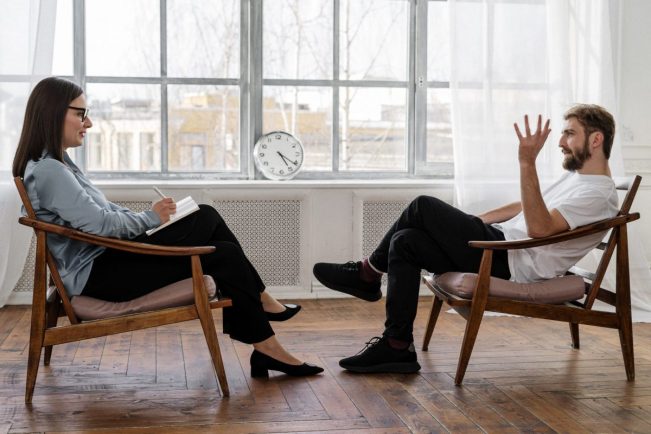
Columnist and trained counsellor Fiona Caine advises a single mother dealing with grief, and a woman who’s started drinking too much in lockdown.
HAVE I DEVELOPED A DRINKING PROBLEM IN LOCKDOWN?
I live alone and, since lockdown, have been working from home, which has suited me fine as I’m really not that sociable a person. However, I’ve found myself drinking most days, sometimes to excess, when I’ve felt bored and fed up.
I barely used to drink before this – at most, once a week maybe. It’s got to the point now that I have a drink most mornings by about 11:am and usually knock back at least a bottle of wine each evening, and sometimes several glasses of spirits as well.
I’m going to have to return to the office before much longer and I don’t know how I’m going to manage. I know I’ve either got, or am developing a problem, but I don’t particularly want to stop while things are like this. Perhaps I need people more than I realised?
G. A.
FIONA SAYS: IT’S GOOD YOU’VE RECOGNISED THIS
If you’ve developed a drinking problem during the pandemic, you’re certainly not alone. Research has shown that a lot of people are drinking more – although some who are enjoying home-working and feel secure are actually drinking less.
Stress and isolation are two of the many reasons people have turned to alcohol, and whilst you may not have been aware of stress, it has certainly become a part of most people’s lives. None of us are sure what to do for the best; few people feel they can trust the advice they’re being given, which has changed so frequently, and most people are worried about the future. On top of that, many of our routines will have changed, and that makes it hard to keep on top of things, like drinking, as you’ve found.
People like you, who are living and working alone, have little or no support around you, and it’s all too easy to turn to alcohol to numb anxiety. It’s a good thing that you’ve recognised that you have a problem, and while you say you don’t want to stop drinking, I think you realise you need to get things under control. Hopefully, you’ll have time to tackle this and get back to a healthier level before you need to go back to your office.
One of the most important things you can do to start helping yourself is to look at your mental health. Limiting social media can help to reduce anxiety, as everyone else’s worries and concerns can fuel your own. Although you say you’re not a sociable person, reach out to family and friends for support. We all need other people, and if you can’t see people face-to-face, at least try and see and speak to them virtually – it will help interacting with others.
It might be worth arranging a video chat with someone every day at around mid-morning, as this seems to be the time you start drinking. If you know you’re going to be seen by others, you might be less likely to do so with a glass in your hand.
You don’t mention exercise at all, but getting out for a walk or a run each day will also help you. This is also something you could try for your trigger points – do you, perhaps, top up your drinking at the end of your working day? If so, when you down tools, get outside for some exercise – it will delay you, yet again, from turning to a bottle.
Trying to do this alone might not be easy however, and an additional problem during lockdown has been the way in which services are being stretched. I would suggest you start by talking to your GP though, who can refer you to local services. If you find there is a delay in getting help though, then reach out to some of the organisations that can support you. Alcohol Change UK (alcoholchange.org.uk) can offer help, support and advice that I think you’d find useful. As they say in their information about themselves, they are not anti-alcohol but support a future in which people drink as a conscious choice, not a default as you are doing right now.
SINCE THEIR DAD DIED, MY GIRLS DON’T WANT US TO MOVE HOUSE
My husband died suddenly and unexpectedly three years ago – and it’s been a hard three years, as a single parent, trying to cope with my grief and that of two young girls.
He and I had already decided we ought to move from our two-bedroom house, where they share a room, to something a bit bigger. However, since his death, the girls have been adamant that they don’t want change – everything has to be as it was when daddy was alive.
My elder daughter is now 12 and my younger one is nine, and they’re big! They take up so much space, not just in person but with all their stuff. There is no way I can extend this house, and they really do need their own space, but they don’t want to even consider it.
Whilst I’ve been homeschooling them, it’s been a complete nightmare – none of us can move in this little house and we’ve all been getting on top of one another.
Obviously, I miss my husband too, but I don’t feel he is tied to this house as my daughters do. How do I persuade them that we really have to move?
J. M.
FIONA SAYS: THIS MUST BE SO HARD BUT YOU CAN MOVE FORWARDS
This is a hard one, and what is particularly difficult is that their feelings about their current house are so tied in with the death of their father. One of the things we have to do as parents is to build resilience in our children however, and they need to learn that things can’t always stay the same.
Rather than trying to persuade them, I think this is one of those instances where you have to stand firm and make it clear that there are some decisions you need to make as the grown-up – but you can do this in a gentle and understanding way that makes it clear you are taking their feelings seriously. Explain to them that you and their father were planning a move already, to make more space for you all, and that this is still going to happen.
Instead of just telling them how wonderful it will be to have more space though, to have rooms of their own and so forth, acknowledge their feelings. When they say they don’t want to move because they will miss sitting in the room where their father sat, agree with them, and say you will too. When they say they don’t want things to change, tell them that you don’t either – but that they have to and that you can’t go back to things as they were. In other words, start to acknowledge their fears and anxieties, and you may well find that they gradually come around to the idea.
Take them with you to look at new houses, but make your own decision (within reason) about the house you eventually go for. Obviously, if something about a house you are considering freaks them out completely, you’ll have to think again, but don’t be swayed by any grumpiness. Your children are feeling powerless right now – they couldn’t stop their father from dying, and now they fear they can’t stop you from taking them away from what they know. You will need to prepare them, so start giving them information they can deal with – will they continue at the same school, for example? If they can, that could be reassuring.
Answer the questions they may have and be truthful – it will be disruptive to move, and they will have to cope with new and different things. Even though you know moving will mean an improvement in family life, your daughters won’t necessarily understand that just now. All they’re thinking about is that they’ve lost one important thing in their lives already, and are now about to lose another. Acknowledge that fear and help them to feel involved, by choosing the colour schemes and furnishing for their new rooms, for example. Let them each choose something, or things they associate with their father, to take with them – however odd their choice may be.
When moving day comes, concentrate on getting their space in order, before you start work on the rest of the new house. Having a comfortable, safe space they can retreat to will help them to settle all the sooner, as will maintaining the same schedule for meals and bedtime.
I suspect it won’t be too long before they’re happily settled in their new home, and you can breathe a sigh of relief and find your own safe space again.
MY FIANCE WANTS ME TO GIVE UP WORK WHEN WE MARRY
My fiancé runs a very successful business, and he’s always said his first marriage failed because his wife was so career-driven that they never had time for one another.
We were due to marry later this year but we’ve put it off now until next spring. Meanwhile, we’ve been talking about the future.
He wants me to give up work altogether to run our home.
To be honest, I think I quite like the idea, but another part of me is worried that I’ll turn into a mousy housewife. I don’t know whether to agree with him, or insist I keep working.
A. P.
FIONA SAYS: YOU CAN’T LET SOMEONE ELSE DICTATE YOUR LIFE
What worries me about your letter is not about whether you should keep working or not, but why you are letting your fiancé dictate your future. Being a housewife doesn’t mean becoming “mousy” – but being an unfulfilled doormat certainly will.
This does not sound like two equal people planning the shape of their relationship – it sounds like a selfish man using emotional blackmail to get his own way. You say he blames his wife’s career for the breakdown of his first marriage, but might his lack of consideration for his wife’s needs have had something to do with it too?
Before you marry this man, have a good long think about the kind of future you want. There is nothing wrong with being a housewife and supporting your husband from home, if that’s what you want to do – just don’t leave that decision up to him.
SO UPSET THAT I CAUGHT MY HUSBAND WATCHING PORN
My husband has always been a bit of an insomniac and he’s been worse recently. He will often leave me asleep and go downstairs and I’ve never thought much about it.
The other night though, I woke up extremely thirsty and I slipped downstairs to get a drink, only to find him sitting on the sofa watching porn!
I felt awful and I told him how very hurt I was by this; I told him it was just like him having an affair. He said I was overreacting, that it meant nothing to our relationship, and since then he won’t talk about it at all.
I can’t get over this and I’m left feeling completely confused as to why he is behaving like this.
F. L.
FIONA SAYS: TRY TALKING CALMLY WITH EACH OTHER
I know you have been shocked by finding out that your husband watches porn, but please try not to equate this to him having an affair – it’s really not the same. The fact he doesn’t sleep properly is an indicator of stress, and he’s possibly using porn as a distraction that doesn’t require any effort on his part.
Pornography has been around for as long as there have been ways to produce it, and for some couples, it’s used as part of their relationship, not instead of it. Porn only becomes a problem in a marriage if one partner has a strong objection to it, if its use is secretive or compulsive, or if it interferes with maintaining a healthy shared sex life.
You might consider it to be insulting, degrading, and even a form of cheating, but clearly he doesn’t, and so he doesn’t understand your feelings of anger and hurt. You may not be able to change his attitude and behaviour, but you can take more control over how you deal with this.
Try not to be judgemental, but ask him to explain to you what he likes about porn, and really listen to what he has to say.
Could it be that there are things he sees that he would like to try with you, or is he just bored and it’s a habit? Try to explain, calmly and clearly, why you feel the way you do about porn – try to do this without making him feel you’re attacking or blaming him. If you cannot resolve this issue, then you may need to consider talking to a counsellor or sex therapist, to see if there are other problems in your marriage that are behind this.
If you have a problem you need help with, email Fiona by writing to [email protected] for advice.
All letters are treated in complete confidence and, to protect this privacy, Fiona is unable to pass on your messages to other readers. Fiona regrets that she cannot enter into personal correspondence.