


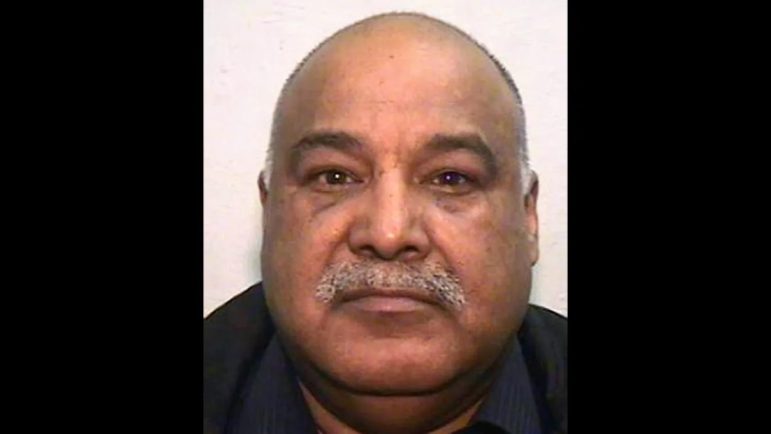
Home Secretary set to unveil plan to close 1971 loophole shielding Shabir Ahmed from removal, as Pakistan signals it will not take him back.
Home Secretary Shabana Mahmood is set out on Monday the legal steps the government will take to try to deport Shabir Ahmed, the ringleader of the Rochdale grooming gang, following his release from prison earlier this month.
Ahmed, now 73, was jailed for 22 years in 2012 after being convicted of 30 offences including rape and other child sexual offences against girls as young as 12 or 13. He was released on licence after serving roughly 14 years, fitted with a GPS tag, placed under an exclusion zone covering Rochdale, and housed in 24-hour staffed accommodation.
Although Ahmed was stripped of his British citizenship following his conviction, he cannot currently be deported to Pakistan because of Section 7 of the Immigration Act 1971, which protects Commonwealth citizens who arrived in the UK before 1973 and had lived here for at least five years. Mahmood is expected to announce that officials believe they have found a way to close this loophole without affecting the immigration status of other long-standing Commonwealth residents, including Windrush-generation migrants.
The announcement is timed to coincide with the second reading of the government’s Immigration and Asylum Bill. It remains unclear whether the change will be introduced as emergency legislation or as a government amendment to the existing Bill; a government source has previously suggested changing the law could take up to a year, though ministers have said they have not ruled out a faster route.
Pakistan resistance
Even if the UK changes its domestic law, Ahmed’s removal is not guaranteed. Pakistan has so far declined to accept him, arguing he had already renounced his Pakistani citizenship and objecting to what Pakistani officials have characterised as a “colonial mindset” in Britain’s approach. Dr Farzana Shaikh of Chatham House has said back-channel negotiations between the two governments are “fraught,” and pointed to reports that Pakistan is separately seeking the extradition of two political dissidents living in the UK — a former cabinet minister under ex-Prime Minister Imran Khan, and a retired army major — as part of the wider diplomatic picture.
Options reportedly under consideration if Pakistan continues to refuse include visa restrictions on Pakistani nationals and reductions to the roughly £50 million in annual UK foreign aid to Pakistan.
Who pushed the government to act?
Both the Conservatives and Reform UK have pressed the government on the case, and each has laid claim to having forced Labour’s hand — though the government itself has framed the move as its own initiative, with the Prime Minister asking Mahmood to review the case after Ahmed’s release triggered public anger.
The Conservatives were the first major party to table a concrete legislative proposal. Shadow Home Secretary Chris Philp drafted an amendment to close the Section 7 loophole and pushed for it to be adopted into the Immigration and Asylum Bill, arguing that emergency legislation was needed so the change could take effect within weeks rather than the year some in government had suggested. Following news of Mahmood’s planned announcement, Philp said the Conservatives had “led the calls” for Ahmed’s deportation and accused Labour of adopting a plan the Tories had proposed “days ago,” calling on the government to move via emergency legislation. Philp has also called for visa and aid restrictions on Pakistan if it continues to refuse to take Ahmed back, a position he has said should apply to any country that will not accept its own nationals.
Reform UK, led by Nigel Farage, has also campaigned publicly on the case, with Farage stating that Reform would repeal Section 7 of the 1971 Act if in government and calling for a suspension of visas for Pakistani nationals if Islamabad refuses to take Ahmed back. Farage has framed the case as an early test for Greater Manchester Mayor Andy Burnham, who has separately urged the government to exhaust every legal avenue to secure Ahmed’s deportation.
Government figures have not credited either opposition party directly. Victims Minister Catherine Atkinson said Mahmood has a “strong track record” on removals, pointing to cases involving Angola, Namibia and the Democratic Republic of Congo where visa-sanction threats secured the return of foreign offenders, and said the government had “not ruled anything out” on the legislative route. A Downing Street spokesperson said this week that “every available option” was being explored, including direct talks with Pakistani authorities.
In the Commons, MPs from across the political spectrum — including Labour’s Graham Stringer and Jim McMahon, the MP for Oldham — have called for the loophole to be closed, suggesting the pressure has come from a broad cross-party reaction to Ahmed’s release rather than from any single party alone.
What happens next
Mahmood’s statement on Monday is expected to set out the domestic legal mechanism the government intends to use. Even so, officials have acknowledged that securing Ahmed’s actual removal will depend on further negotiation with Pakistan, which has given no indication it intends to change its position.