

THE 2026 local election has politically flipped Birmingham City Council onto its head.
After the 2022 poll, it looked like many in England – Labour led with 65, the Conservatives were second with 22 and the Liberal Democrats were third with 12. The Green Party had two councillors.
But, after Thursday’s trip to the polls and with one seat left to declare on Monday, not only does the Second City’s authority have no overall control, it also has no clear biggest party.
Like in a lot of England, Labour paid the biggest price – its 65 councillors was reduced to 16.
The Conservatives also suffered – albeit comparatively marginal – losses – dropping from 22 to 16.
The Liberal Democrats started with 12 and ended with 12. No change there.
The real gains came for Reform UK – as in much of the country – and also the Green Party.
There were no Reform UK councillors in 2022 – Nigel Farage’s party, although a year old by then, was not established. It now it has 22 councillors.
The Green Party had just two councillors in 2022 and is now the second biggest party on Birmingham City Council with 19. It is a remarkable turn around.
Labour’s hammering and fall from grace is probably, in part, mirroring the national picture and the electorate wanting to give Sir Keir Starmer’s party a bloody nose. But it is more likely down to the – still unresolved – bin strike which has seen the Second City’s streets plagued by rubbish and rats for more than 14 months.
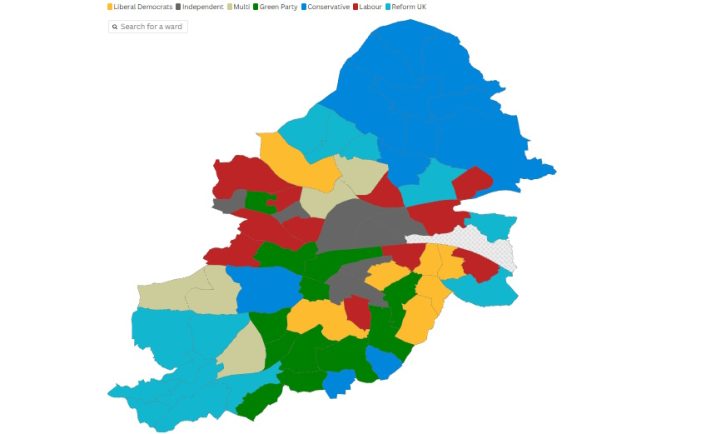
Whatever the reason, Birmingham’s political map is a rich assortment of colours – a proverbial rainbow if you like. And, even with a city of a million people, it looks like every single person could be represented by someone on there. But, it could work the other way and leave councillors schackled when it comes to decision making.
Birmingham’s ‘rainbow’ political make-up?
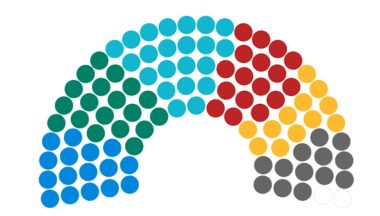
Reform UK is the biggest party on 22, the Green Party is second on 19, with one seat left to declare. The Conservatives and Labour both have 16 each, there are 14 independents, 12 Liberal Democrats, and one Labour and Co-operative Party member.
But the situation leads to a lot of questions about how Birmingham – the biggest unitary authority in Europe with an annual budget of more than £1billion – can possibly be properly governed in a First Past the Post system.
So what happens now?
The leading group usually has two options – to go into coalition with another party (or parties) to reach the majority or govern as a minority party, using others to help it get individual votes through.
With the political make-up as it is, it looks unlikely any workable or agreeable combined coalition could reach the 51 seats needed for a majority. For example, even if Reform and the Conservatives (two right wing parties) teamed up, they would only have 38 (or 39 if the final declaration goes one of their way). They would still need another 12 seats and it is hard to see any of the others wanting to join them.
So it looks like Reform UK would need to set the agenda and, using informal or formal alliances, get their decisions and policies through with the help of others on a case-by-case model.
This, depending on what they work towards, could be a very restrictive way of governing and may mean it is unable to get most of its ideas or policies through. It also poses a very real and serious danger that the council – for its term of office – ends up getting nothing done in its four years.
It will be in everyone’s interests for councillors to work together, give and take and put political differences aside for the Second City’s 1million people. But, with such a variety of political beliefs all on one council and no controlling party, that could be tricky.
And with a bin strike still to resolve and multi-million pound decisions to be made, 2026 to 2030 could provide some very challenging years ahead for this new-look ‘rainbow’ council.