



Over the past two decades, daily life in Britain has changed in quiet but noticeable ways.
The pace that once defined workdays, commutes, and even leisure time has begun to slow for many people.
This shift does not suggest a rejection of ambition or productivity. Instead, it reflects a growing preference for balance, predictability, and personal well-being. Modern British lifestyle choices now place greater value on how time feels, not just how efficiently it gets used.
People encounter this shift in small moments: fewer late evenings at the office, more local walks, shorter commutes, and deliberate breaks from constant digital input. Even when browsing online for entertainment or information, whether reading news or exploring leisure platforms such as bro winner, many Britons approach these activities with moderation rather than urgency. This change signals a broader cultural adjustment rather than a passing trend.
A gradual move away from constant haste
British cities once symbolised relentless motion. Long work hours, packed trains, and tight schedules shaped daily routines. While these elements still exist, their dominance has weakened. Surveys and workplace data show a steady decline in extreme overtime for many sectors. Employees increasingly prioritise manageable schedules.
This adjustment emerged from practical experience. Extended stress proved unsustainable. People noticed how constant pressure affected health, relationships, and focus. Rather than pushing harder, many chose to step back slightly and restructure priorities.
Redefining success
Success in modern Britain no longer relies solely on professional status or income level. While career achievement remains important, it no longer defines self-worth for everyone. Many people now associate success with stability, flexibility in personal time, and mental clarity.
This redefinition appears in everyday conversations. Instead of asking only about job titles, people ask about work-life balance, commute length, or weekend routines. These questions reflect values rather than ambitions.
Work patterns and flexible arrangements
Flexible work arrangements played a significant role in reshaping daily life. Remote and hybrid work models allow people to manage time more independently. This flexibility reduces travel stress and increases control over schedules.
Many workers use this time to prepare meals at home, exercise regularly, or spend time with family. These habits support a sense of balance without reducing productivity.
The changing role of commuting
Commuting once consumed a large portion of the day for many Britons. Long journeys added stress before work even began. Shorter commutes or remote work reduce this strain.
People now invest saved time differently. Some start the day calmly. Others finish earlier. These changes affect mood and energy levels throughout the week.
Leisure as restoration, not distraction
Leisure activities in Britain now focus more on restoration than escape. Rather than filling every free hour with stimulation, many people choose quieter pastimes.
Common choices include:
- Walking in local parks or along canals
- Reading without multitasking
- Cooking meals at home
- Spending time in small social groups
These activities support mental recovery rather than distraction.
Technology with boundaries
Technology remains central to modern life, yet its role has shifted. People use devices deliberately instead of constantly. Notifications stay muted longer. Screen-free hours become routine.
This approach does not reject technology. It places limits on its influence. People decide when and how they engage rather than responding automatically.
Food habits and mindful eating
Eating habits reflect broader lifestyle changes. Many Britons now prefer regular meals over rushed snacks. Cooking at home regained importance, partly for health reasons and partly for rhythm.
Meal preparation offers structure. Sitting down to eat creates pauses in the day. These pauses contribute to a sense of control and calm.
Social interactions evolve
Social life also slowed in positive ways. Instead of frequent large gatherings, people prefer meaningful conversations in smaller settings. This preference supports deeper connection without exhaustion.
Friends meet for walks, coffee, or shared meals. These interactions fit easily into balanced schedules.
Mental health awareness
Mental health discussions entered mainstream culture. Employers, schools, and communities address stress openly. This awareness reduces stigma and encourages preventative care.
People feel more comfortable setting boundaries. Taking time off for mental well-being now receives wider acceptance.
Exercise as routine, not performance
Physical activity shifted away from performance-focused goals. Instead of chasing extremes, many people adopt consistent, moderate exercise routines.
Walking, cycling, yoga, and swimming fit easily into daily schedules. These activities support health without creating pressure.
Housing choices and local living
Housing preferences reflect lifestyle priorities. Many people value proximity to amenities over size or prestige. Local living reduces travel time and strengthens community ties.
Neighbourhood shops, markets, and green spaces gain importance. These environments support slower, more connected routines.
Consumer habits and restraint
Consumer behaviour shows signs of restraint. People buy fewer items but choose carefully. Longevity and practicality matter more than novelty.
This approach reduces financial stress and supports intentional living.
Media consumption patterns
Media consumption also changed. Instead of constant updates, many people select specific times to check news or entertainment. This habit reduces anxiety linked to information overload.
Streaming and on-demand content support this shift by removing fixed schedules.
Time management through simplification
Simplifying schedules helps maintain balance. People avoid overcommitting. They leave gaps between tasks. This structure reduces fatigue.
Common strategies include:
- Fewer meetings per day
- Clear workday boundaries
- Planned breaks
These methods improve focus and satisfaction.
Education and younger generations
Younger generations adopt balanced habits early. Schools and universities promote mental well-being alongside academic performance. This emphasis shapes long-term behaviour.
Students learn to manage time realistically rather than competitively.
Health systems and prevention
Healthcare approaches increasingly focus on prevention. Regular check-ups, lifestyle guidance, and stress management receive attention.
These measures support long-term health rather than reactive treatment.
Public spaces and accessibility
Public spaces reflect lifestyle changes. Cities invest in walkable areas, bike paths, and green zones. These spaces encourage slower movement and outdoor activity.
Access to nature within urban settings supports daily balance.
Workplace culture adjustments
Workplace culture now values sustainability over constant availability. Managers respect boundaries. Clear expectations reduce burnout.
This cultural shift improves retention and morale.
Economic considerations
Economic uncertainty influences lifestyle choices. People seek stability rather than excess. Balanced routines support financial planning and reduce impulsive decisions.
This mindset encourages thoughtful spending and saving.
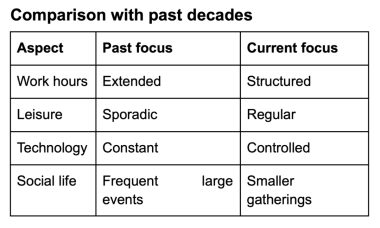
This comparison shows a clear shift toward balance.
The role of community
Community engagement strengthens lifestyle balance. Local events, volunteer work, and shared spaces create connection without pressure.
People contribute at their own pace.
Travel and holidays
Travel habits also reflect moderation. Shorter trips and local destinations gain popularity. These choices reduce stress and cost.
People value rest over packed itineraries.
Personal identity and pace
Identity no longer depends on busyness. People feel comfortable moving at their own pace. This comfort supports confidence and contentment.
Why this shift matters
A balanced lifestyle supports physical health, mental clarity, and social stability. It reduces burnout and improves satisfaction.
This shift does not reject ambition. It reframes it.
Challenges remain
Not everyone experiences this balance equally. Economic pressure and job constraints still affect many. However, the broader cultural direction remains clear.
Awareness creates momentum.
Future outlook
The trend toward balance will likely continue. Technology, policy, and social norms increasingly support it.
Small changes accumulate into lasting habits.
Conclusion
Modern British lifestyle reflects a conscious move toward balance. People value time, health, and connection more than constant acceleration. This shift developed through experience rather than ideology.
By slowing certain aspects of daily life, many Britons gain clarity and stability. Less rush does not mean less purpose. It means choosing where energy goes. This choice shapes a lifestyle that feels sustainable, intentional, and grounded in everyday reality.