


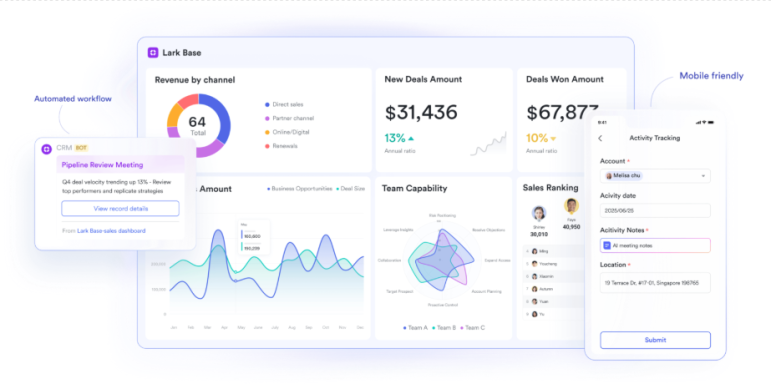
All businesses have had to deal with the annoyance of progress stopping. The budget hasn’t been approved yet, but the campaign is set to launch. The product is ready, but the sales and marketing teams can’t agree on when to release it. There are meetings, but it’s not apparent what to do next. These bottlenecks cost more than just time; they make the business less competitive, make staff unhappy, and make customers less likely to trust the business.
The problem isn’t the effort. People are putting in a lot of labor. The problem is that things are broken up. There are too many places for information to be, choices travel via channels that aren’t connected, and it’s not apparent who is responsible for what. Modern project management tools indicate that there is a better way to do things. Lark and other platforms improve the way work flows by combining planning, talking, and doing. This makes sure that everything runs well from beginning to end. Instead of pushing harder against challenges, businesses find a means to avoid them.
Lark Base: Creating flow through shared structure
Lark Base.
There will always be problems when each department has its own systems. Marketing might use spreadsheets to plan campaigns, sales might use a CRM to keep track of prospects, and operations might use other platforms to plan out resources. Leaders spend hours attempting to figure out reports that don’t agree instead of getting things done.
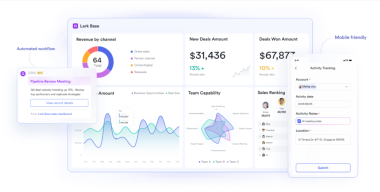
Lark Base solves this problem by putting all of your projects in one flexible hub. Sales teams set up the configuration in Base so that delivery plans are quickly linked to client opportunities. Kanban lets marketing see campaigns, and deadlines, and assists operations in keeping track of their resources. Everyone uses the same system, and they can see updates as they happen.
This shared framework makes things go faster and also truly reflects the value of a modern CRM app in business processes. Leaders don’t have to wait for weekly updates to find out how things are progressing. Employees don’t do the same thing twice because everyone can see what they have to do. People work together on a project, not only on their own tasks.
Lark Messenger: Keeping communication in motion
Lark Messenger.
When people can’t talk to each other, it can create unseen bottlenecks. A quick decision made on a chat app never makes it to the project team, and vital updates get buried in long email threads. In the end, decisions don’t lead to action, and work stops.
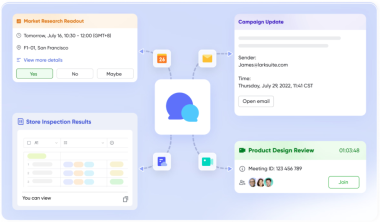
Lark Messenger changes how things operate by connecting talking to doing. You can make a Task out of a chat regarding a client request with just one click, or you can connect it directly to a Base record so that everyone knows what’s going on. When you share files via Messenger, they stay attached to their projects, so you don’t lose any information. Built-in translation helps teams from all around the world work together and makes sure that nothing gets lost when it crosses borders.
Messenger makes things flow more smoothly by shortening the time between talking and doing. Conversations don’t just end; they become steps that help the business move forward.
Lark Calendar: Synchronizing the rhythm of work
Lark Calendar
Time is one of the most typical reasons for delays. When one team is ready and the other isn’t, projects become stuck or deadlines are missed because the schedules are kept separate. When businesses don’t operate together, they lose momentum.
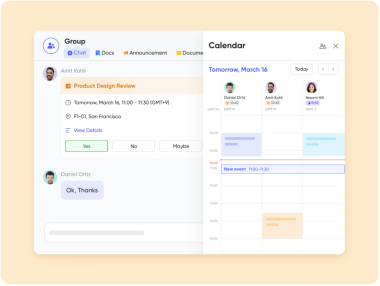
Lark Calendar makes sure that everyone in the company is on the same page. Milestones made in Base automatically show up in Calendar, so everyone in sales, marketing, and operations is on the same page. People can get ready to make decisions instead of wasting time catching up because meetings are directly linked to Docs and agendas. Automatic changes to time zones fix problems that could impede global initiatives from moving ahead.
The ultimate result is a steady beat that departments can work together to create. Calendar makes sure that time isn’t a problem; it gives things a structure that keeps them moving.
Lark Tasks: Automating accountability for smoother handoffs
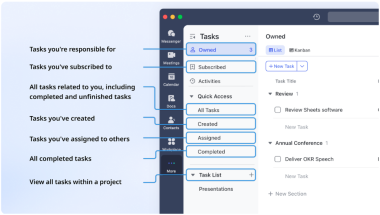
Lark Tasks
Even if projects are well-planned, flow breaks down if people don’t know who is in charge of what. Deadlines are missed, handoffs become forgotten, and managers waste time hunting for updates. These complications make workers mad and slow down deliveries.
People are responsible for their daily chores with Lark Tasks. Employees can view their personal tasks on their dashboards, and managers can see how the whole business is doing. Because jobs are linked to Base and OKRs, they connect smaller jobs to greater ones. Everyone knows what they need to do and why it matters.
Tasks also help things run smoothly through an automated workflow. Reminders, escalations, and updates happen on their own, so work keeps progressing even when managers aren’t around to check in. This automation turns handoffs from issues into smooth transitions, which keeps everything running smoothly.
Lark Docs: Turning collaboration into momentum
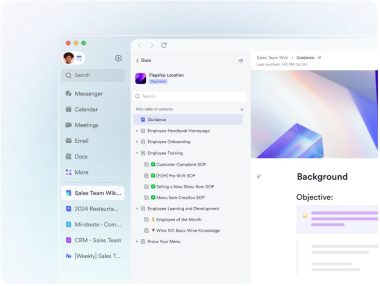
Lark Docs
Documents are another area where growth often falls behind. There are a lot of drafts going around, feedback gets lost in email loops, and teams have to wait days for things to become obvious before they can go on.
Lark Docs turns documents into spaces where people can work together in real time. Teams can work on plans, ideas, or reports together in real time, and comments and versions of history show who has added what. A finalized plan is linked directly to Tasks or Calendar events, so it doesn’t just sit around; it’s ready to be done.
Docs help things move along by eliminating uncertainty about versions. Instead of repairing faults, teams focus on moving the project forward. Working together isn’t a problem anymore; it makes things go faster.
Lark OKR: Directing flow toward outcomes
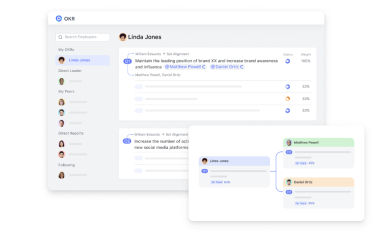
Lark OKR
If the operational flow doesn’t get the right results, it doesn’t matter. A team can move quickly, but if their work doesn’t mesh with the strategy, the organization is still losing time and money. Misalignment is a problem in and of itself that stops work from getting done.
Lark OKR makes sure that flow is connected to results that can be measured. Base and Tasks automatically send forth updates on progress. Leaders define goals and critical results. Workers stay focused and motivated because they can see how their daily duties assist them attain broader goals.
OKR turns operational flow into strategic momentum by making sure that work is in line with the plan. Not only does work get done faster, but it also proceeds in the appropriate way.
Conclusion
There will always be problems with faulty systems in organizations. It’s hard to hold people accountable when information is spread out, and choices get stuck. Bottlenecks don’t have to happen; they happen when the flow isn’t good. Unified solutions like Lark solve difficulties and create integrated workflows that keep projects on track.
Base establishes a shared structure, Messenger connects communication to action, Calendar keeps everyone’s schedules in sync, Tasks automate accountability, Docs keep everyone working together, and OKR makes sure that flow leads to outcomes. These things change operational flow from a sequence of problems into a smooth path forward.
Leaders don’t get things done by pushing harder against problems. They come from building systems that get rid of roadblocks. Companies go from making progress that stops and begins to generating continuous, reliable breakthroughs that can develop when they integrate their workflows.
Written by Yaqoob Khan