


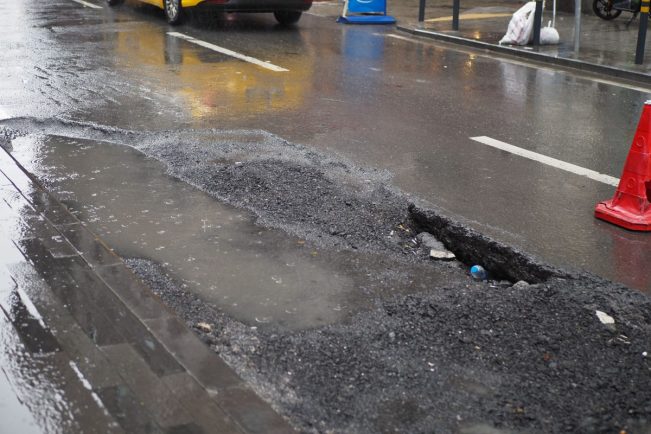
Driving around the UK is no longer the safest and most pleasurable thing you can do these days, all the more when it comes to Worcestershire streets like Hill Avenue in Green Hill, Shrawley Road in Fernhill Heath, and A38 Bath Road in Worcester.
The pothole situation, for which authorities and local keepers have already been called out, has worsened significantly as of late.
Not long ago, news broke out that fixing these holes could take 11 years and cost authorities an arm and a leg.
Riding around can be a really insecure feat for both car drivers and motorists as hollows and depressions in roads’ surfaces have become unsurprising on the country’s roads. More importantly, new research disclosed that fewer than 20% of compensation claims end up being resolved and reimbursing the victims. Despite being mostly illegal, some UK residents reportedly try filling up the potholes themselves, suggesting how urgent reparation is.
What do these issues reveal and how can you improve your odds of securing compensation if potholes cause you harm or damage?
We need to make a case for potholes
As per RAC reports, the number of holes on British streets has risen recently, as has the number of callouts for stranded car drivers. Even if some ruts are evitable or inoffensive, the larger ones raise genuine concern for their ability to wreck motors and, consequently, owners’ budgets. Karen Bellairs, the Chief Customer and Commercial Officer of Halfords, exclaimed that the British streets are shocking, pushing drivers to hit the ruts increasingly often.
The cycling and motoring retailer’s research discloses that numerous councils indicate that a mere 18% of accidents involving motorists’ compensation claims resulted in reimbursement. Clearly, there’s room for improvement in areas ranging from the infrastructure to victims’ treatment.
You shouldn’t fill potholes yourself
With many potholes being there for weeks, months, or even years, many individuals have begun taking matters into their own hands and filling in the potholes themselves. This comes as a consequence of the authorizations’ continuous postponements or even neglections, having people bored and tired of waiting. Nevertheless, while one may believe they’re improving their situation, the law may consider the opposite and come after those acting without permission and license. Anyone who ponders fixing potholes themselves should go and report the problem to the suitable authority immediately instead of acting on their own. This undertaking will allow the authorities to carry out the needed evaluations and, where it’s needed, patch up the road.
By doing this, you may be able to avoid any personal liability, both civil and criminal, resulting from attempting to repair the issue by yourself and illegally. Contrarily, under nuisance law, the local authority might hold you responsible for any potential damage that may result from your fixtures. For instance, ambitious repairers could use material that must afterwards removed by the local authority so that the whole can be repaired according to their standards and procedures. There are instances when attempting to handle the holes yourself could have you inculpated based on a criminal offence, as such a move could amount to criminal damage. The repercussion and gravity of the felony depend on the level of damage generated.
Strengthening your case for compensation
All these current issues highlight the importance of being prepared with the right tips and knowledge to boost your likelihood of getting compensation if you are the unfortunate victim of UK road potholes. Here are some tips to enhance your chances of being paid damages to offset your losses.
- Document everything. The stronger the proof that you were a victim of others’ negligence, the better your chances of being paid damages. Take explicit pics and videos of the damage your vehicle suffered, of your incurred injuries, and of the street and potholes leading to the catastrophe. Such proof may support your claim and show the problem’s extent.
- Report the incident ASAP. As with any other accident, it is essential to contact the authorities as soon as possible. Contact the road authority or local council to report the pothole and damage. Remember that some agencies have special reporting procedures, so documenting your complaint rapidly proves you took immediate action.
- Gather Witnesses. Witnesses’ statements can make the difference between success and failure, so if anyone were around and saw the incident, it’s best to ask for their contact details. Witnesses can help strengthen your claim, and by working with a claim solicitor, you’ll give them more tools to boost your case’s chances of success.
- Track expenses. Keep records of any expenses you may incur, like medical and repair bills or transportation receipts. See a health professional immediately if you deem something wrong, even if your costs may not be reimbursed due to a failed compensation claim. Some scars are unobservable but can provoke serious health problems and conditions without giving hints.
- File the compensation claim. Most UK local authorities have a compensation claim-filling procedure for pothole-related damage. Follow those guidelines carefully and give all the needed documentation, preferably being transparent about the damages you seek.
- Consult legal experts if needed. If you face a refusal or if your compensation offer is lacking, think of consulting a specialist who deals with personal injuries. They usually work under a “No Win No Fee” program, meaning you won’t be taxed unless your lawyer wins your case.
What about claiming via insurance?
Assuming you own wide-ranging insurance, you’ll want to use it to get paid. There are situations when you may be able to use it to make your claim for the damage incurred and see your expenses offset. It’s essential to weigh the risk of your insurer finding you guilty of the accident, which could possibly lead to a costly excess fee. Holes may rapidly open up, all the more when the weather is unfavourable. The last time you passed by a hole, it might have been less dangerous – or almost inexistent.
Knowing these tips and steps may help you fortify your case and boost the likelihood of compensation for pothole-related damage or injuries sooner or later, should you ever go through a similarly daunting event. Drive carefully!
Article written by Cynthia Madison
Photo source: https://www.vecteezy.com/photo/42658131-big-pot-hole-filled-with-water-at-street