

If you’re a born and bred ‘Bromsgrovian’, you might think you know everything there is to know about our little piece of Worcestershire. Well, prepare to test that theory as we discover a few surprising facts about this fascinating Midlands town below.
1. Inspiring the fellowship. Author J.R.R. Tolkien spent a lot of time in and around Bromsgrove and other local towns and villages as a child. So much so, that the nearby Clent Hills and Worcestershire countryside are thought to have influenced his descriptions of the Shire in one of the bestselling books ever written, The Lord of the Rings.
2. The stuff of myth and legend – the slaying of a magical boar and its connection to the town’s coat of arms. According to local folklore, Sir Rylas was a brave and noble knight living in the area around Bromsgrove.
The surrounding countryside was terrorised by a ferocious and magical boar that destroyed crops, attacked villagers, and generally caused chaos across the region.
No one dared to face this monstrous creature due to its immense size, strength, and magical powers. With only his armour and a spear to protect him, Sir Rylas took it upon himself to rid Bromsgrove of this dangerous beast.
After an intense and deadly battle, Sir Rylas managed to slay the magical creature, freeing the town and its people from its terror.
This legendary act of heroism is immortalised in Bromsgrove’s coat of arms, where a boar’s head is prominently displayed above the blue shield with three gold leopards which represents England.
3. Bromsgrove is officially one of the UK’s ‘Best Places to Live’. So said the Sunday Times in 2019, thanks to the area’s green spaces, good schools, low crime rates, excellent healthcare facilities and access to major cities like Birmingham and Worcester, attracting families and commuters alike.
According to the local estate agent Yopa, property prices in Bromsgrove do tend to be higher than other areas of Worcestershire, and the average for the rest of the UK, but I think we can all agree it is worth it to be a proud ‘Bromsgrovian’!
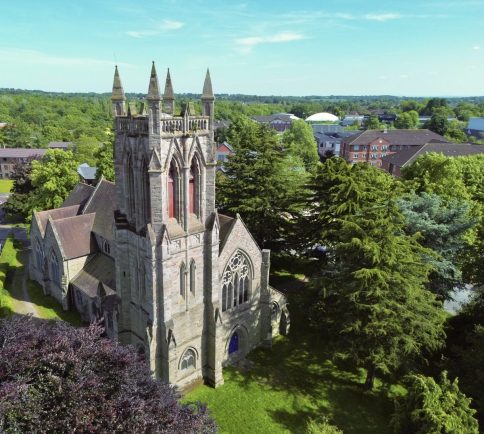
4. Bromsgrove is home to the UK’s first open-air museum. The Avoncroft Museum of Historic Buildings features over thirty restored buildings from different periods in British history, including a windmill, a 1940s prefab home, and a 19th-century church. Architecture aficionados rejoice!
5. The Legend of the “Nailmaker’s Strike”. Bromsgrove played a significant role in the nail-making industry during the 19th century.
At one point, the town was one of the largest producers of hand-forged nails in the UK. In 1815, fed up with falling wages and poor working conditions, local nail-makers organised a strike that lasted for eight years. It was one of the longest and most famous industrial disputes in British history.
6. “Remember, remember the 5th of November!” Bromsgrove has a surprising link to the infamous Gunpowder Plot of 1605. Thomas Wintour, one of the key conspirators whose confession provided historians with much of the background to the famous plot, was arrested near Bromsgrove.
He and his brother, Robert Wintour, had connections to the area, and they were part of the group plotting to assassinate King James I and establish Catholic rule in England by blowing up the Houses of Parliament.
7. The Harry Potter connection. Whilst older viewers might remember him from his role in the insanely popular 90s sketch show, The Fast Show, or his more recent, grown up role as Father Brown, the dulcet ‘Bromsgrovian’ tones of local lad and actor Mark Williams will forever be recognised by a generation of muggles as Arthur Weasley, Ron’s father in the Harry Potter films.
8. The Bromsgrove Guild – A right royal pedigree. Bromsgrove was once home to the Bromsgrove Guild of Applied Arts, an arts and crafts guild that operated in the town from 1898 to 1966.
The Guild was famous for creating metalwork, ironwork, and stone sculptures and one of their most notable works was crafting the ornate iron gates of Buckingham Palace. The Guild also worked on the interior of the ill-fated RMS Titanic, including the famous grand staircase painstakingly brought back to life in James Cameron’s 1997 blockbuster, Titanic.